


 September 2, 2026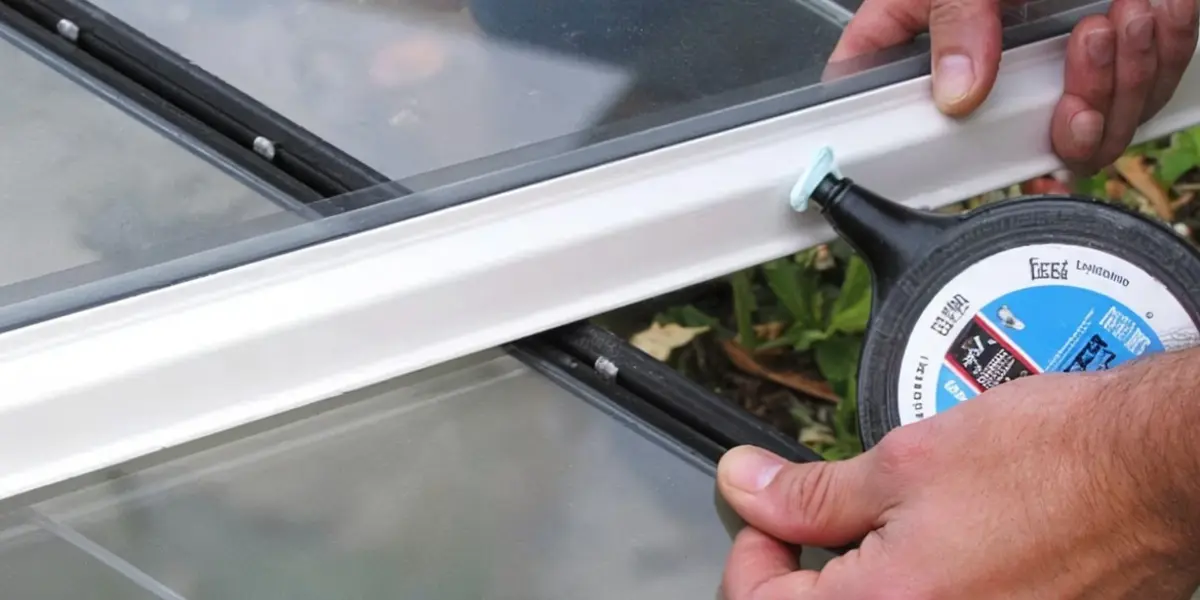
Polycarbonate sealing should be matched to the location of the joint and the way the entire structure works. There is no single material that can correctly protect open chambers, the joint between two sheets, a fixing point and the contact between the covering and the supporting structure. Tapes, profiles, EPDM seals and silicone perform different functions, so they should be used where they are actually needed.
The type of sheet also matters. Multiwall polycarbonate requires the open channels to be protected while maintaining the ability to drain moisture. Solid sheets have no chambers, but joints, fixings and expansion allowances still need to be made correctly. In both cases, materials that come into direct contact with polycarbonate must be compatible with it.
What should you use to seal polycarbonate? Choosing a solution for the specific location
The choice of sealing material depends primarily on the function of the particular element. With multiwall polycarbonate, tapes protect the channels, profiles protect the edges and connect adjacent sheets, while EPDM elements may be responsible for sealing fixings or the contact between the sheet and the profile. Silicone, meanwhile, performs a supplementary function in specific installation details.
The main solutions can be organised according to where they are used:
|
Material or element
|
Typical application
|
Main function
|
|---|---|---|
|
Solid or aluminium tape
|
Upper end of a multiwall sheet
|
Limiting the entry of water, dust and insects into the channels
|
|
Ventilation or vapour-permeable tape
|
Lower end of a multiwall sheet
|
Protecting the chambers while allowing moisture to drain
|
|
Closing profile
|
Sheet edges
|
Protecting the tape and providing a mechanical finish to the edge
|
|
Connecting or clamping profile
|
Joint between adjacent sheets
|
Stable connection of the sheets and correct performance of the joint
|
|
EPDM
|
Fixings, washers and selected profiles
|
Flexible sealing without rigidly locking the sheet
|
|
Compatible silicone
|
Selected profiles, flashings and other details specified by the system
|
Local sealing of the joint
|
None of these materials should automatically replace the others. A complete set of polycarbonate accessories should therefore be selected together with the sheets and their fixing method, rather than only after a watertightness problem appears in the finished structure.
How should polycarbonate be prepared before sealing?
The durability of tape, a seal or silicone also depends on the condition of the surface. The edges should be clean and dry, without dust produced during processing. With multiwall polycarbonate, it is particularly important to remove small chips from inside the channels before sealing them.
If the sheet needs to be adapted to the structure, cutting multiwall polycarbonate should be completed before applying tapes and installing profiles. After processing, the cross-section should be checked again because chips left in the chambers will be difficult to remove later.
Random solvents or strong chemicals should not be used for cleaning. A safe starting point is clean or lukewarm water, a mild detergent and a soft cloth. If a specialist product is used, its compatibility with polycarbonate and any protective layer on the sheet should be confirmed by the manufacturer.
The surface for silicone should also be prepared in accordance with the technical data sheet of the specific sealant. Application conditions and curing times may vary between products, so a single temperature range should not be assumed to be suitable for every silicone.
How should polycarbonate chambers be properly protected?
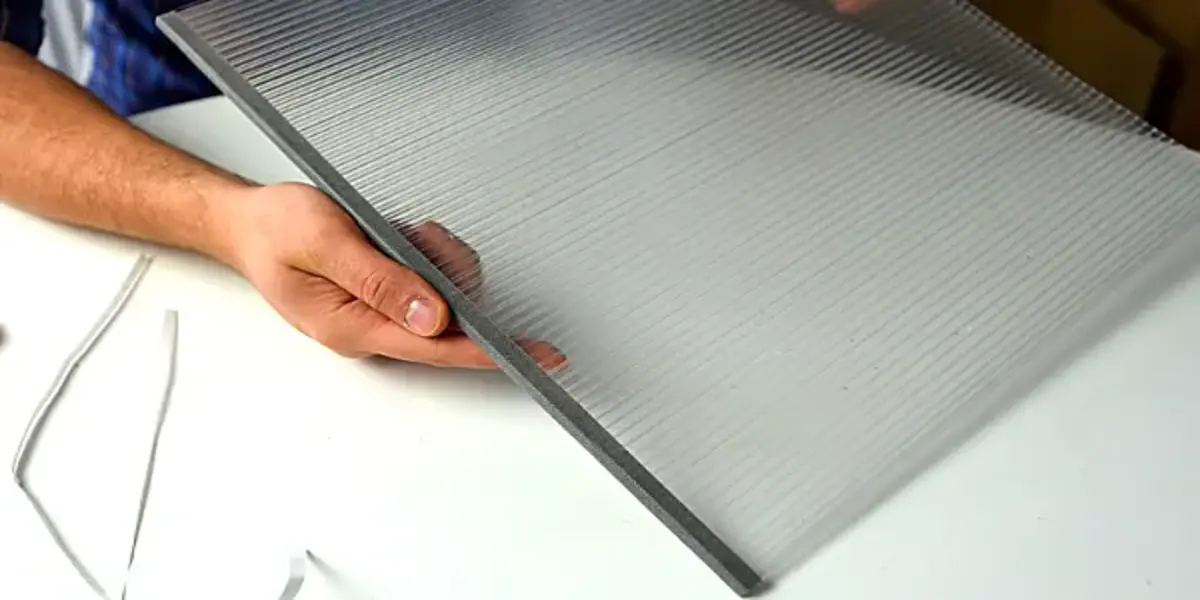
In multiwall sheets, the upper and lower ends perform different functions and therefore require different materials. Completely sealing both edges may make it difficult for moisture to drain, while leaving the channels completely open increases the risk of dust, insects and other contaminants entering them.
Upper edge of the sheet
The upper end of the chambers should primarily prevent water and dirt from entering the sheet. In typical systems, solid sealing tape, often aluminium, is used here to close the cross-section of the channels.
An appropriate closing profile is fitted over the protected edge if required by the system. The profile protects the tape against mechanical damage and helps finish the sheet edge correctly. However, it should not be selected solely on the basis of appearance – it must match the sheet thickness and the structure.
Lower edge of the sheet
Ventilation or vapour-permeable tape is used at the lower end. Its purpose is to limit the entry of larger contaminants into the chambers without sealing the channels as tightly as at the top.
The lower tape is also protected with an appropriate profile, but the way it is installed must not block the solution designed to drain moisture. Random holes of a predetermined diameter or spacing should not be made independently because the construction of the end detail depends on the specific profile and system.
The arrangement of the channels themselves is equally important. On sloping surfaces, they should run in the direction of the slope so that moisture can move towards the lower end. Correct polycarbonate orientation therefore includes both the orientation of the UV-protected layer and the correct direction of the multiwall sheet structure.
How do you seal the joint between two sheets?
The joint between adjacent sheets should not be made simply by bringing their edges together and filling the resulting gap with silicone. Polycarbonate changes dimensions under the influence of temperature, so the joint must simultaneously stabilise the sheets, limit water penetration and leave the space required for their thermal movement.
Profiles matched to the type and thickness of the sheets are used for such joints. Depending on the structure, this may include an H-profile for polycarbonate or a system of clamping profiles fitted with appropriate seals.
When joining multiwall polycarbonate, the support location, channel direction, protection of the sheet ends and the required expansion allowance must all be considered together. A profile should not be treated as an independent accessory placed over randomly positioned sheets.
Silicone may be used in such a joint only if specified by the system being used. It should not be used to fill the entire space required for sheet movement or as a substitute for the correct profile.
How do you seal fixings and joints between the sheet and the structure?
A point fixing is a particular location because a mechanical element passes through the sheet while the polycarbonate must still be able to expand and contract. For this reason, watertightness cannot be achieved by tightening the screw as firmly as possible against the sheet surface.
Many systems use washers or seals made from EPDM. The flexible material limits water penetration at the fixing point and can compensate for small movements within the joint. The washer should sit evenly against the surface, but it should not be compressed to the point where the polycarbonate is visibly indented.
The type of washer should be selected together with the screws for multiwall polycarbonate and the diameter of the hole being made. Correct fixing depends on the specific system, so it cannot be assumed that every sheet requires an identical screw, washer and installation clearance.
EPDM can also be used in clamping profiles and between the sheet and other structural elements. In this case, the seal creates a continuous contact zone instead of multiple separate fixing points. However, the way it is used should follow the geometry of the profile rather than a universal rule applying to all structures.
Silicone for polycarbonate – which type should you choose and where should it be used?
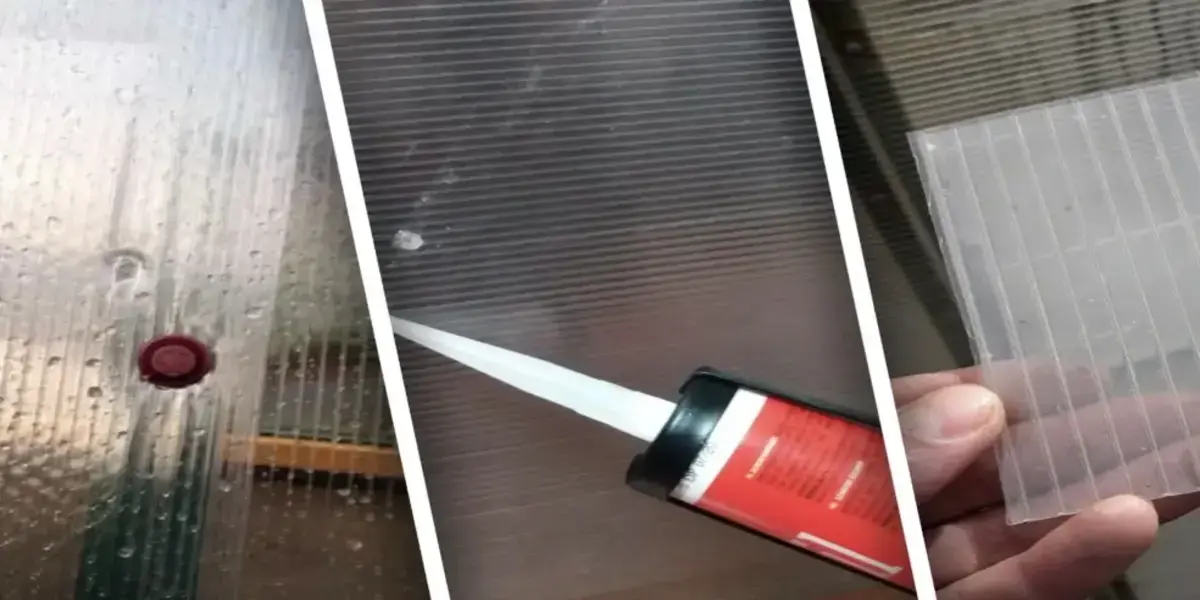
Silicone can effectively seal selected joints, but only if it is intended for contact with polycarbonate. The description “universal” or even “neutral” alone is not sufficient confirmation of compatibility. The sealant manufacturer’s information and the requirements of the system in which the sheet is being installed must be checked.
A good example is the instructions for Marlon ST sheets, where the manufacturer specifies the use of a low-modulus neutral silicone and indicates a small bead for a particular method of finishing a U-profile. This is a solution for a specific system, not a rule requiring silicone to be applied to all edges of multiwall sheets.
Silicone may be used with specific profiles, flashings and structural joints. However, it should not replace sealing tape, ventilation tape, an EPDM washer or a connecting profile. It should also not be used to fill expansion spaces whose purpose is to allow the sheet to change dimensions.
At a junction with a façade, silicone should also be only one part of a correctly designed detail. If water runs down the wall directly into the gap, the primary protection should be the correct geometry of the flashing or profile, rather than an increasingly thick layer of sealant applied to the surface.
Sealing solid polycarbonate – how does it differ from multiwall polycarbonate?
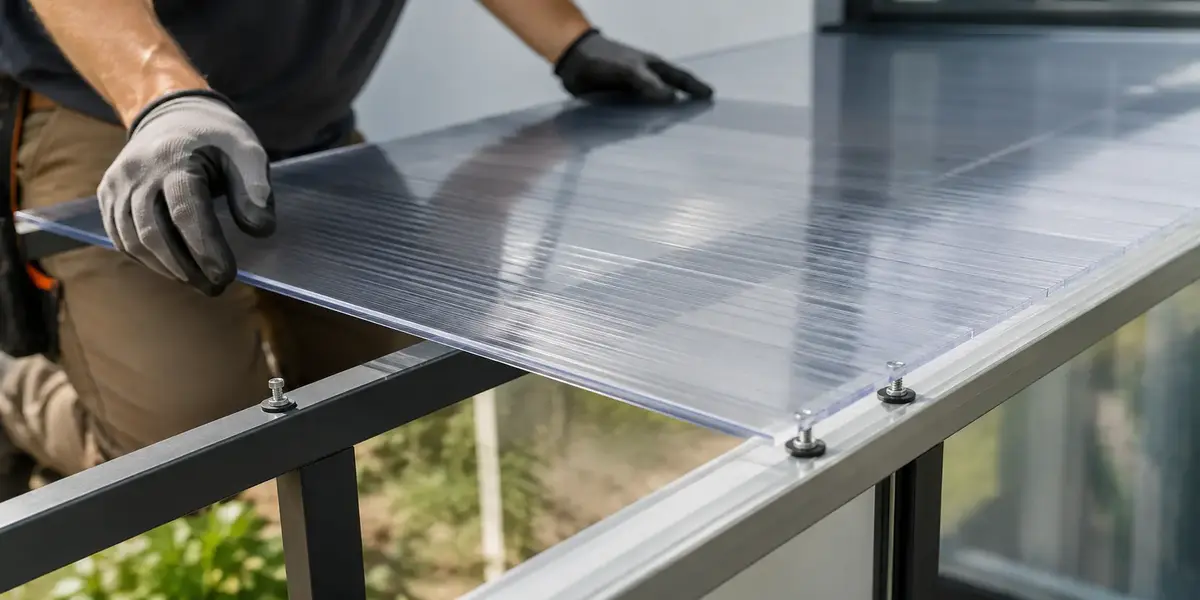
Solid polycarbonate has no internal channels, so after cutting there is no need to protect its upper and lower edges using two different types of tape. The cut edge remains a solid cross-section of plastic.
This does not mean, however, that a structure made from solid sheet requires no sealing. Sheet joints, fixing points, installation in profiles and connections with other structural elements must still be made correctly. All these locations must also take the thermal expansion of the material into account.
When installing solid polycarbonate, watertightness is therefore directly linked to the way the sheet is seated. If the sheet has been fixed without room for thermal movement or the profile does not match its thickness, simply adding sealant will not eliminate the underlying cause of the problem.
How should polycarbonate be sealed during installation?
The best time to carry out sealing is during sheet installation, when all edges, profiles and fixing points are still easily accessible. The sequence of work should follow the structure, but for a typical installation using multiwall sheets, the following procedure can be adopted:
- Plan the position of the sheets and profiles. Before cutting, determine the locations of joints, supports and fixings as well as the direction of the structural slope.
- Prepare the sheets. Cut them to the correct dimensions, remove dust and thoroughly clean the channels of any debris left from processing.
- Check the orientation of the sheets. The UV-protected layer should face in the direction indicated by the manufacturer, and the channels should run in the correct direction.
- Protect the open chambers. Seal the upper ends with the appropriate sealing tape and protect the lower ends with a ventilated solution.
- Install closing and connecting profiles. The elements should match the sheet thickness and must not block the function intended for the lower end.
- Prepare the fixings. Maintain the clearance required by the system for thermal movement and use appropriate seals or washers.
- Tighten the elements without deforming the sheet. The fixing should stabilise the sheet rather than indent its surface.
- Apply silicone only where specified by the system. Use a product with confirmed compatibility with polycarbonate.
- Inspect all ends and joints. Before completing the work, check the lower edges, profiles, sheet joints and fixing points in particular.
Sealing is therefore one stage of correct multiwall polycarbonate installation. If the method of closing the chambers, the profiles and the fixings are planned before the sheets are cut, it is considerably easier to maintain the continuity of the entire system.
How can you recognise incorrectly installed sealing?
The most obvious symptom is a leak that appears during rainfall, but not every problem will be visible immediately. Water may travel along a profile or structural element, so the point where it appears on the inside is not always the exact location of the leak.
If the problem occurs around a single screw, the condition of the washer, the pressure of the fixing and the sheet itself around the hole should be checked. Water appearing along the joint between two sheets may indicate incorrect seating in the profile, damage to the seal or insufficient space for the thermal movement of the sheets.
With multiwall sheets, dust, insects and other contaminants entering the channels are also a sign that the installation should be inspected. This most commonly indicates a problem with the sheet end or damage to the tape protecting it.
The mere presence of a small amount of condensation inside the chambers does not necessarily indicate a leak. Moisture may form as a result of temperature changes, so the lower end should allow it to drain. The situation should be assessed differently if rainwater regularly enters the channels.
How can a leak be repaired without adding random silicone?
It is best to begin the repair by identifying the cause. Covering the visible leak with another layer of silicone may temporarily change the direction in which the water flows, but it will not repair an incorrectly seated profile, damaged tape or an overtightened fixing.
If the problem concerns the end of a multiwall sheet, the tape and profile should be checked. Loose or damaged tape should be replaced after first cleaning and thoroughly drying the edge. At the lower end, the ability to drain moisture must also be maintained.
If the joint between the sheets is leaking, the seating of the sheets and the condition of the profile and seals should be inspected. If the sheet has moved out of its correct position or does not have the required clearance, simply sealing the surface with silicone may further restrict its ability to move.
At the fixing point, the washer, pressure and condition of the polycarbonate around the hole should be assessed. If the surface has already become deformed or cracked, tightening the screw further will not improve watertightness and may increase the damage.
The most common mistakes when sealing polycarbonate
Problems usually occur when individual elements of the system are used in ways that do not correspond to their intended function. The most common mistakes include:
- sealing the upper and lower edges of a multiwall sheet with the same solid tape;
- leaving the channels open and unprotected after cutting the sheet;
- installing the closing profile in a way that blocks the intended drainage of moisture;
- using silicone without confirming its compatibility with polycarbonate;
- replacing a connecting profile or tape with a thick layer of sealant;
- filling the space required for thermal expansion with silicone;
- using unsuitable washers for point fixings;
- overtightening screws and deforming the sheet surface;
- applying tape to a dirty or damp edge;
- using aggressive chemicals when preparing the surface.
Correct sealing therefore does not mean sealing every joint as tightly as possible. The structure must simultaneously protect against water, allow thermal movement of the sheets and – in the case of multiwall polycarbonate – allow moisture to leave the channels through a correctly constructed lower end.
Summary
Polycarbonate is sealed using several complementary elements. Tapes protect the chambers, profiles are responsible for sheet edges and joints, while EPDM can seal fixings and joints in clamping systems. Silicone works well in specific details, but it must be compatible with polycarbonate and cannot replace the correct profiles, tapes or expansion allowances.
The most important factor is matching the solution to the type of sheet and the specific location within the structure. In multiwall polycarbonate, the upper and lower ends require different methods of protection, while with solid sheets the focus is on profiles, fixings and sheet joints. A correctly installed system should remain watertight without restricting the natural movement of the material.