


 August 3, 2026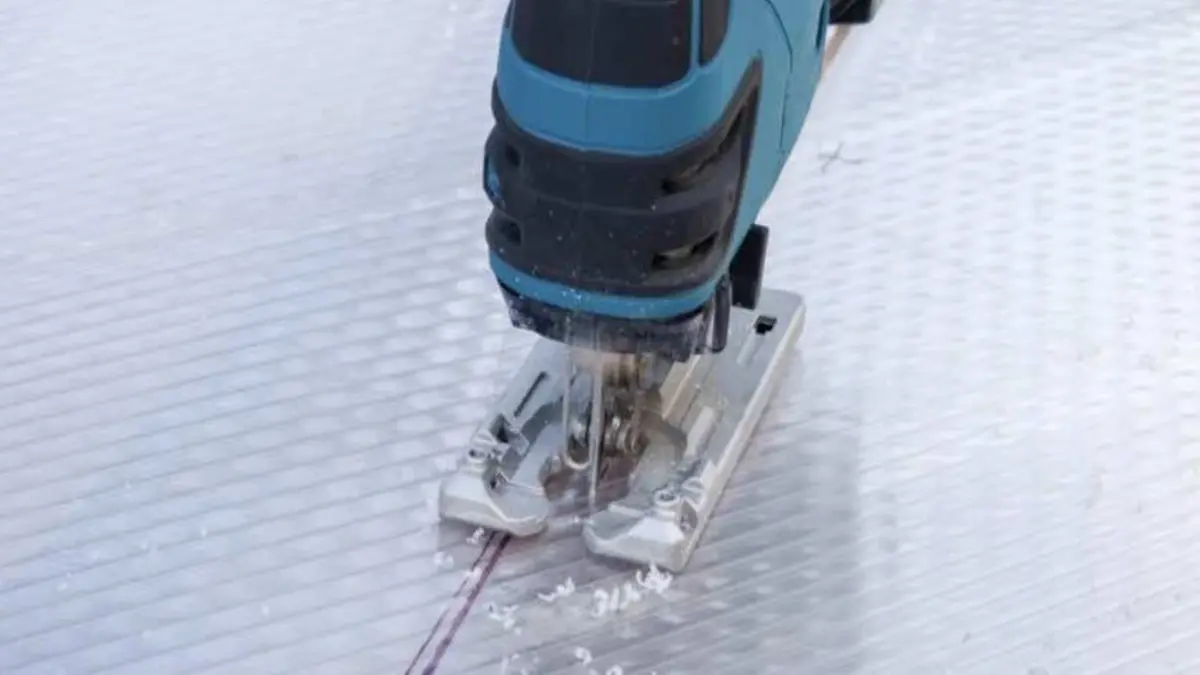
Multi-wall polycarbonate can be cut independently, but it has to be done in a controlled way. The material is lightweight, impact-resistant and convenient to install, but its multi-wall structure requires the right tool, stable support and calm, steady cutting. Using a blade that is too aggressive, applying excessive pressure or working on a poorly supported sheet may result in cracked edges, torn chambers, melted plastic or contamination inside the sheet.
The most important question is therefore not only what to cut multi-wall polycarbonate with, but also how to prepare the sheet for processing. A thin sheet for a lightweight cover requires a different approach from a thicker sheet intended for a roof, greenhouse, pergola or terrace canopy. Oteko offers multi-wall polycarbonate in different thicknesses and variants, so the cutting method should be matched to the specific application and the parameters of the selected sheet.
What determines the choice of tool for cutting polycarbonate?
The choice of tool depends mainly on the sheet thickness, the length of the cutting line, the expected precision and the place where the sheet will later be installed. For straight and long sections, the best tools are those that can be guided steadily along the marked line. For curves, openings and local adjustments, a tool that gives better control over the working direction is needed.
It also matters whether the edge will remain visible after installation. With technical elements, small irregularities can sometimes be corrected, but with a terrace canopy, greenhouse roof or side wall, the aesthetics of the cut are much more important. An even edge makes it easier to slide the sheet into the profile, improves the appearance of the structure and allows the open chambers to be protected more accurately.
Multi-wall polycarbonate should not be cut with a random saw with large teeth. A blade that is too aggressive may tear the thin chamber walls and leave a ragged edge. The best results are achieved with fine-toothed tools, a stable guide and an even working pace without sudden pressure.
What is the best way to cut multi-wall polycarbonate?

Several tools can be used to cut multi-wall polycarbonate, but each of them works best in a different situation. The choice should depend on the type of cut, sheet thickness and working conditions. Below is a practical comparison of the most commonly used methods.
Circular saw – the best choice for long, straight cuts
A circular saw is the most convenient solution when a larger sheet needs to be cut along a straight line. It works well when preparing sheets for canopies, side walls, pergolas, gazebos and greenhouses. It allows an even edge to be achieved, provided that the sheet lies stably and the blade is suitable for plastics or materials requiring a clean cut.
It is best to use a blade with fine, closely spaced teeth. Teeth that are too large may tear out fragments of the material and damage the chamber walls. Cutting should be smooth, without stopping the blade in one place. The sheet should also not be pressed pointwise, because local stress may cause cracking at the edge.
This method is well suited to sheets installed as polycarbonate for roofing, where an even line, precise dimensions and easy positioning of the sheet in the structure are important. With larger formats, it is worth working on a wide table, supports or a stable frame so that the sheet does not sag under its own weight.
Jigsaw – for curves, corners and unusual shapes
A jigsaw gives more freedom of movement than a circular saw, which is why it works well for curves, cut-outs, openings and fitting the sheet to an existing structure. It is useful when the sheet needs to be trimmed locally, routed around a load-bearing element or corrected in shape already during installation.
For multi-wall polycarbonate, a fine-toothed blade should be selected. This may be a blade for plastics or metal. A blade that is too coarse or aggressive will tear the material, cause vibration and leave an uneven edge. If the jigsaw has a pendulum action function, it is best to switch it off, as this reduces the risk of damaging the chambers.
During work, the tool must not be guided too quickly. The jigsaw should move evenly, without strong pressure. Corners require particular control because local stress can occur easily in these areas. For more visible elements, it is worth leaving a small margin and then gently evening out the edge.
Utility knife – only for thin sheets and simple corrections
A utility knife is suitable only for thin sheets and short, straight cuts. It is not a universal tool for cutting multi-wall polycarbonate because thicker sheets offer too much resistance. Trying to cut such a sheet with a knife may result in an uneven line, blade slipping or crushed chamber walls.
Cutting with a knife should involve several calm passes along the same line. The sheet must lie on a hard, even surface, and the blade should be guided along a straightedge or guide. The entire thickness should not be cut in one movement. This increases the risk of damaging the sheet and losing control of the blade.
This method may be useful for minor corrections, but it should not replace a circular saw or jigsaw for larger sheets. If the sheet is to be installed in a visible place, it is better to choose a tool that provides a cleaner edge.
Hand saw, router and angle grinder – when do they make sense?
A hand saw can be used for small corrections when there is no access to power tools. However, it is necessary to choose a model with fine teeth and guide the cut slowly. The sheet must be very well supported because the movement of the saw can easily make the sheet vibrate. For long lines, this method is less convenient and requires more time.
A router works well for more precise edge processing, especially when the element will remain visible or needs to be fitted with high accuracy. This is more of a workshop solution than a typical home method. It requires the right router bit, a stable workstation and smooth guidance to avoid overheating the plastic.
An angle grinder should be treated as an emergency solution. The tool works quickly and can easily heat the sheet edge. If the disc stays in one place for too long, the plastic may melt, deform or tear. For sheets installed in visible areas, it is better to avoid this method.
How to prepare multi-wall polycarbonate for cutting?
Before cutting, both the sheet and the workstation must be prepared. The sheet should lie on a stable, even surface. The cutting line must be clearly visible, and the sheet should be secured against movement. However, it should not be pressed too strongly, because local deformation may damage the chambers.
Sheet preparation should include several steps:
- leaving the protective film on the sheet surface until processing is complete;
- measuring the sheet accurately and marking the cutting line on the film;
- checking the direction of the chambers before final cutting;
- placing the sheet on a stable surface with support close to the cutting line;
- immobilising the sheet without point-crushing the material;
- preparing a tool with a fine, sharp blade.
The protective film reduces the risk of scratching and makes it easier to mark dimensions. The direction of the chambers is especially important in outdoor structures because it affects moisture drainage. For sheets used as polycarbonate for greenhouses, the channels should be positioned so that condensation can drain freely downwards.
How to cut polycarbonate without cracks?
Cutting without cracks requires, above all, limiting vibration. The sheet must not hang in the air or bend beyond the support line. If the sheet moves during cutting, the blade starts tearing the material and the edge loses its evenness. With large sheets, it is best to support the material on both sides of the cutting line.
The second rule is to guide the tool smoothly. Work should not be forced or sped up by applying pressure, and the blade should not be stopped in one place. Excessive pressure may damage the chamber walls, while excessive friction may melt the edge. If the tool starts making an uneven sound and the sheet vibrates or bends, cutting should be stopped and the sheet position corrected.
The third rule is to check the cutting line regularly. Dust and chips should be removed as you work so that the progress remains visible. After cutting, the edge should be checked for cracks, burrs or melted fragments. A clean edge will make it easier to protect the sheet later with tape and a profile.
Cutting thin and thick sheets – what should you pay attention to?
Thin sheets are easier to cut, but they are more prone to bending. In their case, even support along the entire length is the most important factor. For short, straight cuts, a utility knife can sometimes be used, but for longer lines it is better to choose a tool that provides greater stability.
Medium thicknesses require an even pace and a sharp tool. For example, 6 mm multi-wall polycarbonate is lightweight and convenient to process, but it still requires stable positioning so that the edge is not ragged. In turn, 8 mm multi-wall polycarbonate provides greater rigidity, but it should also not vibrate during cutting.
Thicker sheets require slower and more controlled cutting. 10 mm multi-wall polycarbonate and 16 mm multi-wall polycarbonate are chosen where structural rigidity, insulation and durability are important. With such sheets, particular attention should be paid to tool resistance, edge heating and thorough cleaning of the chambers after the work is finished.
What should be done with the edge after cutting the sheet?
After cutting the sheet, installation should not begin immediately. The open edge requires cleaning and protection. During cutting, dust, chips and small plastic fragments get into the chambers. If they remain inside, they may be visible after the sheet is installed and may interfere with proper chamber ventilation.
First, contamination should be removed using compressed air, a vacuum cleaner with a narrow nozzle or another method that will not damage the sheet walls. Then the edge should be checked to make sure it is even. Small burrs can be gently smoothed out, but larger cracks usually mean that the sheet was poorly supported or the cut was made too aggressively.
After the chambers have been cleaned, the edges must be protected with suitable tapes and profiles. The upper edge should limit the entry of water, dust and insects, while the lower edge must allow moisture to drain. More rules on sheet positioning, expansion gaps and edge protection are described in the guide how to properly install multi-wall polycarbonate.
Most common mistakes when cutting multi-wall polycarbonate

Most problems occur when cutting is done in a hurry. Multi-wall polycarbonate is impact-resistant, but this does not mean it can be processed without preparation. A poorly selected tool, lack of support or excessive pressure may damage the edge and make later installation more difficult.
During cutting, the following mistakes should be avoided in particular:
- removing the protective film before processing is complete;
- cutting the sheet without stable support close to the working line;
- using a blade or jigsaw blade with teeth that are too large;
- guiding the tool with excessive pressure;
- stopping the blade in one place and overheating the plastic;
- leaving dust and chips inside the chambers;
- installing the sheet without protecting the open edges.
Cutting mistakes often become visible only during installation. An uneven edge does not fit well into the profile, dirty chambers reduce aesthetics, and unprotected edges collect moisture faster. That is why, for larger projects, it is also worth checking the guide common mistakes in polycarbonate installation.
Cutting and later installation – why should both stages be planned together?
Cutting the sheet should be planned together with later fixing. With polycarbonate, the direction of the chambers, expansion gaps, space for profiles and the method of moisture drainage must all be taken into account. If the sheet is cut without considering these elements, even an even edge may not be enough for correct installation.
For terrace canopies, precise fitting of the sheets to the load-bearing structure is important. In the case of materials such as polycarbonate for terraces, the edge often remains visible, so the cut should be as clean and even as possible. For roofs and larger structures, the thermal movement of the material must also be considered.
Holes and fixings are equally important. If the sheet is to be drilled after cutting, appropriate distances from the edge must be maintained and the correct mounting elements should be used. The choice of fixings is described in the article what kind of screws should be used for multi-wall polycarbonate, which complements the topic of preparing sheets for installation.
Conclusion
Multi-wall polycarbonate is best cut with a tool matched to the sheet thickness and type of work. For long, straight lines, a circular saw with fine teeth is most often the best option. For curves, openings and local corrections, a jigsaw will be more convenient. A utility knife can be used only for thin sheets and short cuts, while a hand saw, router or angle grinder should be chosen only in justified cases.
The most important rules for cutting without cracks are stable sheet support, leaving the protective film in place, marking the line accurately, using a sharp tool and guiding the work calmly. The sheet should not vibrate, bend or be pressed pointwise. After cutting, the chambers must be cleaned, the edge checked and protected with suitable tapes and a profile.
Properly cut multi-wall polycarbonate is easier to install, looks better and retains its functional properties for longer. Accuracy at the cutting stage therefore affects not only the aesthetics of the edge, but also the tightness, durability and stability of the entire structure.