


 August 3, 2026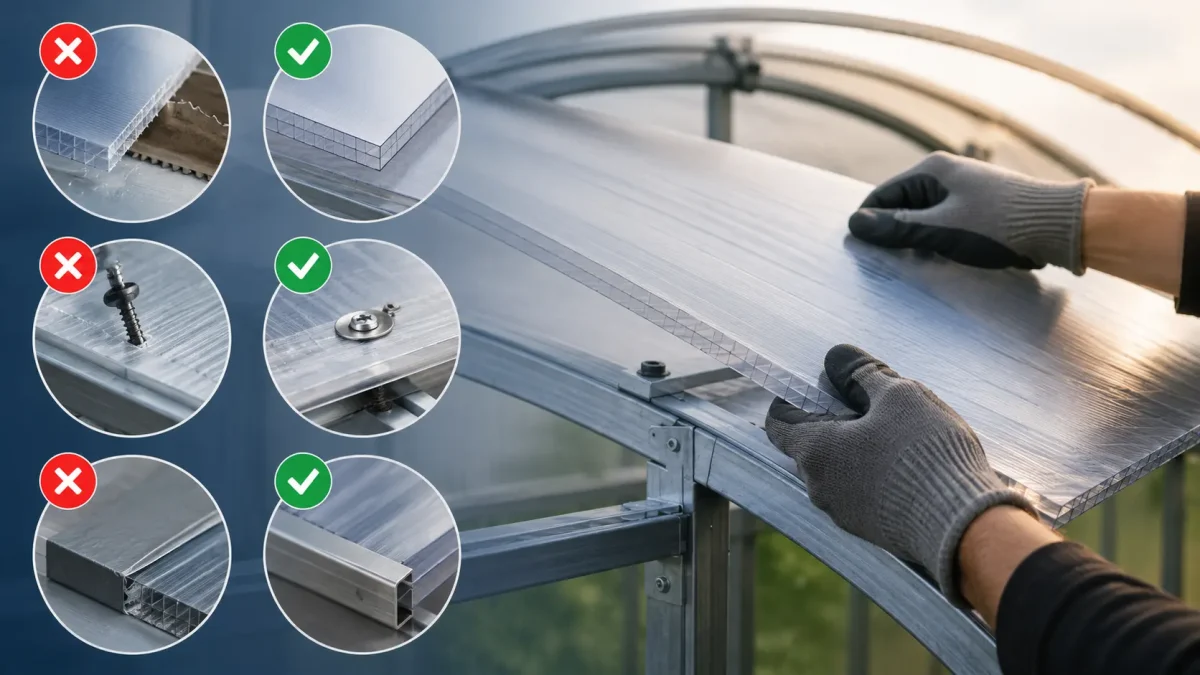
Polycarbonate is a material that has become a popular choice in construction, horticulture, and spatial design thanks to its low weight, durability, and light transmission. From greenhouses to terrace roofing, its versatility is invaluable. However, even the best material can fail if it is not processed and installed correctly. In this article, we discuss the most common mistakes made when working with polycarbonate and explain how to avoid them so that your structures remain durable and visually attractive.
10 mistakes to avoid when working with polycarbonate
1. Cutting polycarbonate incorrectly
Using unsuitable tools, such as blunt hand saws or wood saws, can result in rough edges, cracks, or damage to the UV coating. For example, cutting multiwall polycarbonate with a large-toothed saw may damage the chamber structure and reduce its insulation performance.
How can this be avoided? Use fine-toothed circular saw blades designed for plastics or dedicated polycarbonate cutting knives. Work on a stable surface, mark the cutting lines accurately, and use guides to ensure precision. For example, a circular saw operating at 3,000-4,000 rpm helps minimise the risk of damage.
2. Drilling holes incorrectly
Drilling polycarbonate with standard metal drill bits or at excessively high speeds may cause cracking and overheating. A lack of support beneath the sheet also increases the risk of deformation.
How can this be avoided? Use HSS drill bits designed for plastics with a point angle of 60-90°. Work at low speeds of 500-1,000 rpm and remove shavings regularly. Place the sheet on a stable supporting surface, such as a board, and drill holes at least 40 mm from the edge to prevent cracking.
3. Ignoring the manufacturer’s recommendations
Every polycarbonate manufacturer provides detailed processing and installation instructions. Ignoring them, for example by using unsuitable accessories, may lead to damage such as leaking roofing or the loss of warranty coverage.
How can this be avoided? Read the product data sheet before starting work. Check the recommendations concerning sheet thickness, accessories such as aluminium profiles, and installation methods. For example, Oteko.pl provides detailed instructions for each type of polycarbonate on the relevant product page.
4. Failing to allow for thermal expansion
Polycarbonate expands and contracts in response to temperature changes by approximately 0.065 mm per metre for every 1°C. A lack of expansion gaps may cause bending, cracking, or deformation, particularly in large structures such as car park roofing.
How can this be avoided? Leave expansion gaps of 3-5 mm per metre of length between sheets and around fixing points. Use expansion profiles and ensure that screw holes are 2-3 mm larger than the screw diameter to allow the material to move.
5. Fixing the sheets incorrectly
Overtightening screws or using unsuitable fasteners may create stress, deformation, or even cracks. For example, fixing greenhouse sheets too tightly may result in leaks.
How can this be avoided? Use screws with rubber or plastic washers and tighten them with moderate force. The recommended torque is usually 2-3 Nm. Space the fixing points according to the recommendations, generally every 50-70 cm, and use dedicated aluminium or PVC profiles.
6. Failing to protect sheet edges
Unprotected edges of multiwall polycarbonate are vulnerable to dust, moisture, and insects entering the chambers, reducing both appearance and durability. In greenhouses, for example, this may lead to mould developing inside the chambers.
How can this be avoided? Protect the upper edges with solid sealing tape and the lower edges with vapour-permeable tape that allows moisture to drain. Use closing profiles, such as U-shaped profiles, to provide additional protection.
7. Insufficient ventilation of the structure
A lack of ventilation in enclosed structures such as conservatories or rooflights can lead to overheating and moisture condensation, which may damage the polycarbonate and reduce user comfort.
How can this be avoided? Provide ventilation openings covering approximately 5-10% of the roof area or install active ventilation systems. In greenhouses, fit opening windows or vents to regulate temperature and humidity.
8. Using unsuitable tools
Blunt saws, metal drill bits, or angle grinders may damage the polycarbonate surface, causing scratches or microcracks that become worse over time.
How can this be avoided? Invest in tools designed for plastics, such as circular saw blades with carbide-tipped teeth, HSS drill bits, or acrylic cutting knives. Check the condition of the tools regularly to ensure smooth cutting and drilling.
9. Failing to comply with building regulations
Ignoring local standards, such as those governing wind or snow loads, may result in an unstable structure or legal problems, particularly in large installations such as acoustic barriers.
How can this be avoided? Consult a structural engineer and check the applicable local regulations, such as PN-EN 14388 for acoustic barriers. Ensure that the structure meets all relevant safety and strength requirements.
10. Lack of technical experience
People without the appropriate knowledge may make mistakes involving cutting, fixing, or expansion allowances, leading to expensive repairs. For example, an incorrectly installed roof may begin leaking within several months.
How can this be avoided? When you lack experience, use professional installation services or consult the experts at Oteko.pl. You can also complete training in polycarbonate processing or read the guides available on our website.
Summary and practical advice
Working with polycarbonate requires precision, suitable tools, and knowledge of the correct processing methods. Avoiding the mistakes described above will help you create durable, visually attractive, and functional structures that will remain in use for many years. The key recommendations are:
- Use dedicated cutting and drilling tools to achieve smooth edges and prevent cracks.
- Leave expansion gaps of 3-5 mm per metre to allow for thermal expansion.
- Protect the sheet edges with suitable tapes and profiles to prevent moisture and dirt from entering.
- Provide ventilation in enclosed structures to prevent overheating and condensation.
- Follow the manufacturer’s instructions and applicable local building regulations.
Would you like to learn more about working professionally with polycarbonate? Read our article “Polycarbonate sheet installation guide”, which explains step by step how to achieve excellent results. Do you have any questions? Contact the experts at Oteko.pl – we will help you choose and install polycarbonate correctly.