

 August 3, 2026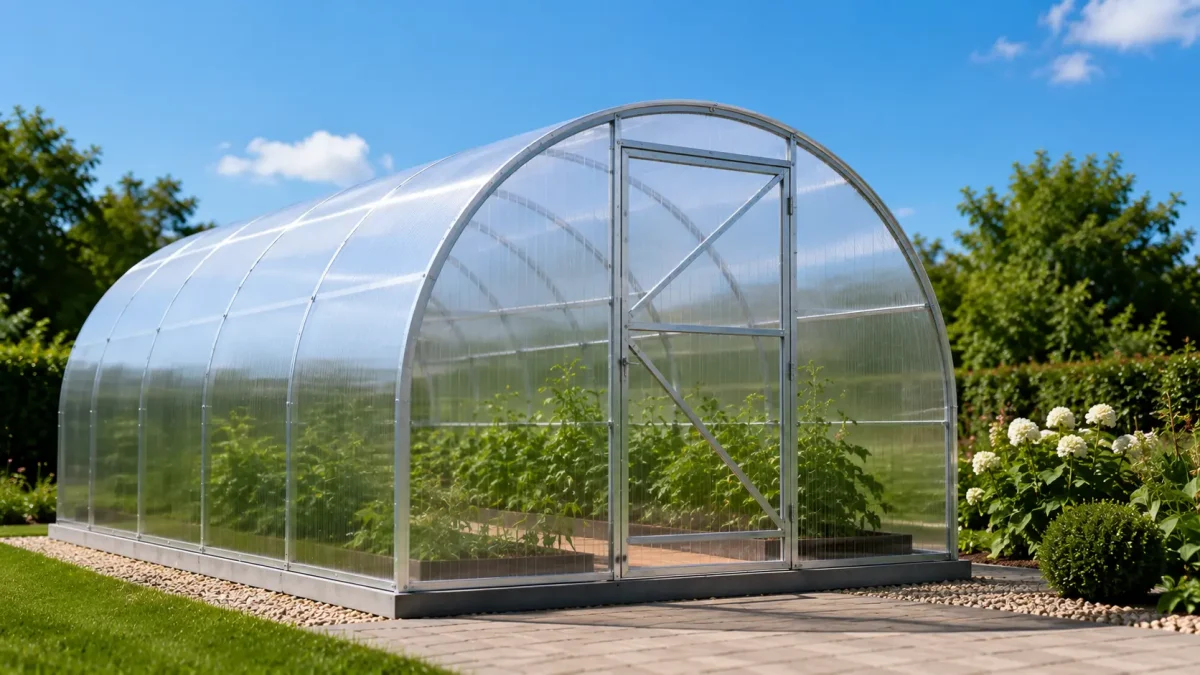
When choosing a material for roofing, a greenhouse, or another lightweight structure, it is worth considering not only the technical parameters but also the convenience of future use. One of the most common questions is whether opal (milky) or clear polycarbonate will be the better solution.
Before purchasing, it is therefore worth checking how the two variants differ in practice and in which situations each performs best. This makes it easier to choose the right sheet for a specific application and avoid an unsuitable decision.
Why is polycarbonate so popular?
For many years, polycarbonate has been one of the most popular materials used in the construction of greenhouses, terrace roofs, conservatories, and many other lightweight structures. Its popularity is no coincidence. This solution combines properties that prove highly beneficial in practice, both technically and in everyday use.
One of its most important advantages is its low weight combined with high strength. Polycarbonate sheets do not place excessive loads on the supporting structure, while also withstanding weather conditions such as strong winds, rain, and hail. Compared with glass, they are considerably more resistant to mechanical damage and safer in everyday use.
Resistance to UV radiation is also important. High-quality polycarbonate retains its properties for a long time, does not yellow too quickly, and does not lose its attractive appearance under intense sunlight. This directly contributes to the durability of the entire structure and reduces the need for frequent material replacement.
Another important advantage is ease of processing. Polycarbonate can be cut relatively easily, adapted to a specific project, and installed even in less conventional designs. This makes it suitable for both simple domestic roofing and more extensive projects.
The versatility of the material also contributes to its popularity. Depending on whether opal (milky) or clear polycarbonate is selected, a different result can be achieved in terms of light levels, thermal comfort, and screening from outside views. This ability to adapt the material to specific needs is precisely why polycarbonate is used in such a wide range of projects.
Key differences between opal (milky) and clear polycarbonate

The choice between these variants is usually based on several important factors: the amount of light, user comfort, the level of privacy, and the visual appearance of the structure. The comparison below makes it possible to quickly determine which type of polycarbonate is better suited to specific conditions.
| Parameter | Clear polycarbonate | Opal (milky) polycarbonate |
|---|---|---|
| Light transmission | Very high – provides maximum illumination | Lower – the light is diffused and softer |
| Visual effect | Similar to glass – a clear view of the sky and surroundings | A matt, subtler effect without full transparency |
| Comfort on sunny days | May cause the space to heat up considerably | Reduces harsh sunlight and improves comfort |
| Privacy | Low | Greater screening from outside views |
| Visibility of dirt and scratches | More noticeable | Less visible in everyday use |
| Applications | Greenhouses and places requiring maximum light | Terraces, balconies, and relaxation areas |
The comparison clearly shows that clear polycarbonate performs best where maximum use of daylight is essential. The opal variant, in turn, is better suited to relaxation areas – it reduces harsh sunlight, increases privacy, and provides more comfortable conditions beneath the roof.
Clear polycarbonate – where does it perform best?

Clear polycarbonate is most often selected when the priority is to maximise access to daylight. Thanks to its high light transmission, the material produces an effect similar to glass while offering considerably greater resistance to damage and safer use.
This variant performs particularly well wherever natural light directly affects the function of the space. This applies primarily to greenhouses, where adequate sunlight is important for the healthy growth of many plant species. Clear sheets are also commonly used in conservatories and lightweight roofing where maintaining a bright, open character and a view of the surroundings and sky is important.
The main advantages of clear polycarbonate include:
- very high light transmission,
- an appearance similar to glass,
- good performance in places requiring intensive illumination,
- visually brightening the space and making the structure appear lighter.
However, its disadvantages should also be considered. During periods of intense sunlight, the space beneath such roofing may heat up faster than beneath opal sheets. Clear polycarbonate also provides no screening from outside views, so it may not be equally practical in every location, especially on terraces and balconies situated close to neighbouring buildings.
Opal (milky) polycarbonate – when is it the best choice?

Opal (milky) polycarbonate is a solution primarily intended to improve user comfort. Unlike the clear version, it does not transmit light directly but diffuses it. As a result, the space remains bright without harsh light or glare.
This type of sheet performs particularly well in areas intended for relaxation, such as terraces, balconies, and domestic leisure spaces. Diffused light creates more pleasant conditions, especially in summer, while also helping to reduce excessive heat build-up beneath the roof.
Opal (milky) polycarbonate is worth considering when the following are particularly important:
- greater comfort on sunny days,
- soft and evenly diffused light,
- a higher level of privacy,
- reduced visibility of dirt and minor scratches.
An important advantage is also its practicality in everyday use. Signs of wear are less noticeable on a matt surface than on clear sheets. In the multiwall version, good thermal insulation is an additional benefit, helping to reduce both overheating in summer and heat loss during colder periods.
As a result, opal (milky) polycarbonate performs best where comfort, protection from intense sunlight, and a more sheltered and private character are the main priorities.
Opal (milky) or clear polycarbonate for a greenhouse?
In a greenhouse, choosing the right type of polycarbonate is important because it directly affects the amount of light, the internal temperature, and plant development conditions. The decision between opal and clear sheets should therefore be adapted to the type of cultivation and local sunlight conditions.
Clear polycarbonate provides very high light transmission, which benefits plants that require plenty of sunlight. This material supports intensive photosynthesis and may therefore accelerate crop growth. It is a particularly good solution where access to natural light is limited, for example in less sunny locations or during transitional seasons.
Opal (milky) polycarbonate works differently. Instead of transmitting light as directly, it diffuses it so that the rays reach the plants more evenly. This may reduce the risk of overheating and decrease the likelihood of leaf damage on very sunny days. This variant also helps maintain a more stable microclimate inside the greenhouse.
In practice, the choice usually depends on which conditions are most important:
- clear polycarbonate – when maximum illumination and rapid plant development are the priority,
- opal (milky) polycarbonate – when excessive sunlight, high temperatures, and the risk of overheating inside the greenhouse are concerns.
For many standard greenhouse applications, clear polycarbonate remains the most versatile solution. The opal variant is chosen more often in warmer locations or where even light diffusion and improved temperature control are more important than maximising the amount of light.
Opal (milky) or clear polycarbonate for a terrace?
For a terrace, the most important consideration is how the space will perform in everyday use. Unlike a greenhouse, the objective is not to maximise the amount of light but to ensure comfort beneath the roof. The choice between opal and clear polycarbonate should therefore be based mainly on convenience of use.
Clear polycarbonate creates a bright, open space and preserves the view of the sky. The material produces a light, modern visual effect and works well in projects where appearance and the highest possible level of terrace illumination are important. It should be remembered, however, that in practice it may contribute to greater heat build-up, especially in summer and under intense sunlight.
Opal (milky) polycarbonate is usually better suited to relaxation areas. It diffuses light, reduces harsh sunlight, and creates more pleasant conditions for resting. This makes the terrace more functional even on hot days, when too much direct sunlight reduces comfort.
In everyday use, the difference between the two variants is clear:
- beneath clear polycarbonate, the space is brighter but usually also warmer,
- beneath opal (milky) polycarbonate, the light is softer and conditions under the roof are generally more comfortable.
Another advantage of the opal version is greater privacy, which is particularly important in densely developed areas or where the terrace is located close to neighbouring houses and flats. These sheets are also more practical to maintain because dirt and minor signs of use are usually less visible.
As a result, opal (milky) polycarbonate is often the better choice for a terrace or balcony because it provides not only an attractive appearance but, above all, greater comfort in everyday use.
Solid and multiwall sheets – does colour really matter?

Polycarbonate sheets are primarily available in two structural variants – solid sheets and multiwall sheets. The difference between them affects not only durability and insulation performance but also the way light passes through the material. For this reason, both the colour and structure of the sheet should be considered when making a selection.
Solid sheets most closely resemble glass. They offer high clarity and provide the strongest fully transparent effect. When selected in a clear version, they provide excellent illumination and a clear view of the sky and surroundings. This variant is commonly used where a modern appearance and maximum access to light are important.
Multiwall sheets have a different structure. They consist of layers connected by air channels, which affect how light is distributed. Even with a clear finish, the light is diffused to some extent, while the structure itself improves thermal insulation. In practice, this also means less heat build-up than with many solid sheets.
As a result, the colour and sheet type complement one another. Opal multiwall polycarbonate provides the softest, most diffused light and a high level of everyday comfort. A clear solid sheet, in turn, provides maximum brightness and the most open visual effect but offers less protection from harsh sunlight.
What should you consider when choosing polycarbonate?
The selection of the right type of polycarbonate should be based on actual conditions of use rather than made at random. Matching the material to the installation location and the function of the structure is essential.
When making a decision, the following factors should be considered:
- the level of sunlight in the location,
- the intended use of the structure, such as a greenhouse, terrace, or roof,
- the expected level of user comfort,
- the need for privacy,
- the thickness and type of sheet, whether solid or multiwall.
In places exposed to intense sunlight, opal (milky) polycarbonate often performs better because it diffuses light and reduces heat build-up. In locations with limited access to light, the clear variant is more functional because it provides maximum illumination.
Conclusion
The choice between opal (milky) and clear polycarbonate should depend primarily on the conditions in which the material will be used and the expectations placed on the finished structure.
The final decision should be based on factors such as the amount of light, the level of sun exposure, user comfort, and the need for privacy. Both variants are durable, practical, and suitable for a wide range of applications, but each performs best in slightly different projects.