

 August 3, 2026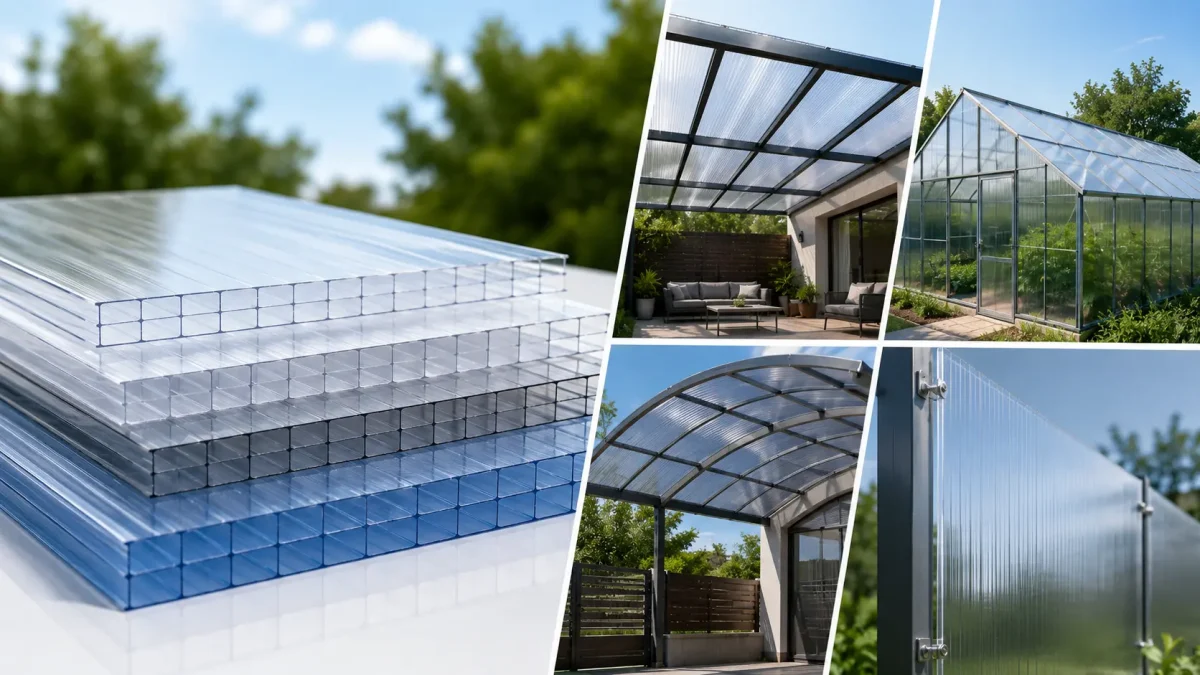
Multiwall polycarbonate is a modern material that has transformed construction and spatial design. Lightweight, durable, and offering excellent thermal insulation, it is an ideal alternative to glass. Are you looking for a material for roofing, a greenhouse, or a façade? In this article, we explain the properties of multiwall polycarbonate, its applications, and practical installation tips that will help you make full use of its potential.
What is multiwall polycarbonate?
Multiwall polycarbonate is a plastic material made from several layers separated by hollow chambers, which give it exceptional lightness and insulation properties. Available in thicknesses ranging from 4 to 40 mm and in various colours, such as clear, opal, and brown, it can be adapted to the specific requirements of a project, from greenhouses to industrial rooflights.
The multiwall structure provides high mechanical strength – polycarbonate can be up to 200 times more impact-resistant than glass while weighing up to ten times less. This makes it an ideal choice for structures that require both durability and attractive design.
Advantages of multiwall polycarbonate
Multiwall polycarbonate offers unique properties that make it one of the leading construction materials:
- Low weight and high strength: It weighs only 1.5-5 kg/m², depending on the thickness, while its impact resistance allows it to withstand hail and accidental damage.
- Light transmission: Clear sheets transmit up to 90% of visible light in thicknesses of 4-10 mm, making them ideal for conservatories and sports facilities.
- Thermal insulation: The heat transfer coefficient (U-value) ranges from 3.9 W/m²K for 4 mm sheets to 1.0 W/m²K for 25 mm sheets, which can reduce heating energy consumption by up to 30% compared with single glazing.
- Weather resistance: It withstands temperatures from -40°C to +120°C, as well as rain, hail, and UV radiation, thanks to a special protective coating.
- UV protection: The UV coating prevents yellowing and degradation, extending the service life of the material to as much as 20-30 years.
- Ease of processing: Straightforward cutting and drilling allow the sheets to be adapted to different structures without specialist equipment.
- Safety: It does not break into sharp fragments, making it safe for use in public places such as bus shelters.
Applications of multiwall polycarbonate
The versatility of polycarbonate means that it is used in many different areas:
- Roofing: It protects terraces, balconies, shelters, and car parks from rain and sunlight while preserving natural illumination.
- Greenhouses: High light transmission of up to 90% and good thermal insulation support year-round plant cultivation, including organic farming.
- Conservatories: It creates a bright, warm space for relaxation while reducing heating costs.
- Entrance canopies: Attractive and functional, they protect doors and windows from precipitation.
- Balustrade and gate infills: Lightweight and decorative, they give fences and barriers a modern appearance.
- Industrial glazing: Used in warehouses, factories, and sports facilities to improve natural lighting and reduce energy consumption.
- Acoustic barriers: They reduce roadside noise while combining durability with an attractive appearance.
Example: In modern bus shelters, multiwall polycarbonate provides protection from rain and vandalism, while its low weight reduces structural costs.
How should multiwall polycarbonate be installed correctly?
Installing polycarbonate is straightforward, but precision is required to ensure durability and an attractive finish. Below are the key steps and recommendations:
- Channel orientation: Position the channels vertically, or in the direction of the slope on roofs, to allow moisture to drain and prevent dirt from accumulating.
- Installation profiles: Use dedicated aluminium or PVC profiles, such as H, U, and F profiles, to provide stability and watertightness. The profiles should hold the sheet to a depth of at least 20 mm.
- Flexible fixing: Use screws with rubber washers tightened to a torque of 2-3 Nm, and leave expansion gaps of 3-5 mm per metre of sheet length or width to allow for thermal expansion.
- Edge sealing: Protect the upper edges with solid sealing tape and the lower edges with vapour-permeable tape to prevent dust, moisture, and insects from entering the chambers.
- UV coating: Make sure that the UV-protected side, identified by markings on the protective film, faces outwards to provide protection from sunlight.
Important: Avoid fixing the sheets too tightly – excessive stress may cause cracking, particularly in roofing exposed to temperature changes. Read our “Step-by-Step Guide to Installing Polycarbonate Sheets” for detailed instructions.
Summary
Multiwall polycarbonate is an essential material in modern construction, combining low weight, durability, and excellent thermal insulation properties. From greenhouses and roofing to acoustic barriers, its versatility makes it possible to create functional and attractive structures. Thanks to straightforward installation and a wide range of colours and thicknesses, polycarbonate can be adapted to virtually any project. Follow our recommendations to make full use of its potential.
Would you like to learn how to keep polycarbonate in excellent condition? Read our article “How to Care for Multiwall Polycarbonate”, which explains how to maintain the material so that it retains its properties for many years. Contact Oteko.pl to select the right sheets and accessories for your project.