


 August 3, 2026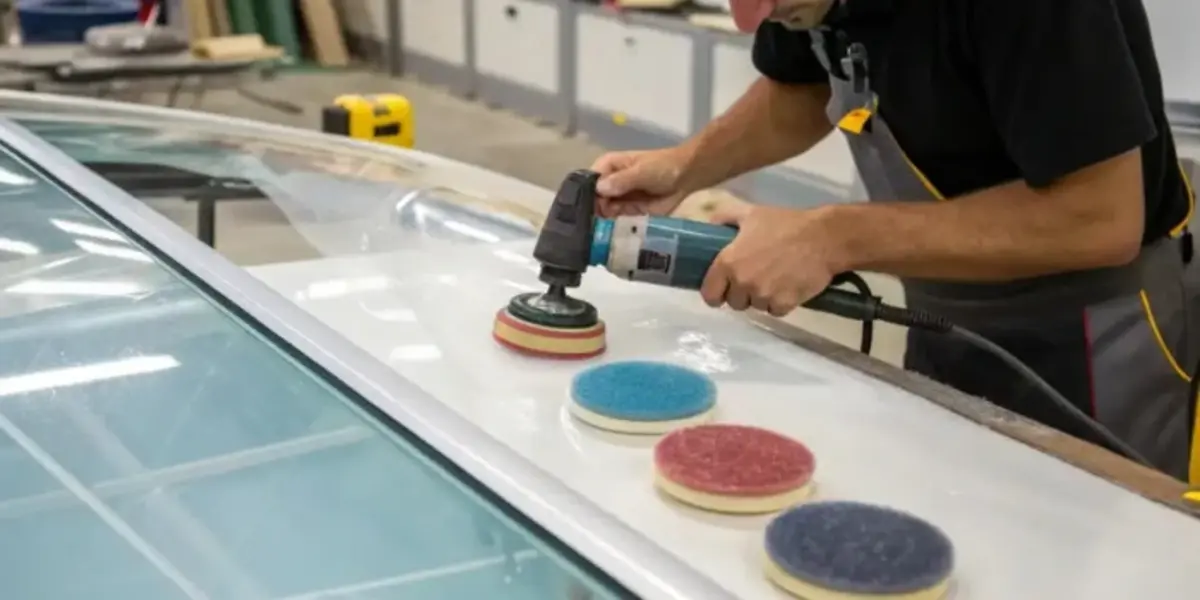
Polycarbonate is a durable and resistant plastic, but its surface may lose its perfectly smooth finish over time. Fine scratches, dullness, cleaning marks or minor damage after processing can make the sheet look less attractive and reduce light transmission. In many cases, its appearance can be improved through careful polishing, provided the damage is superficial and the material has not been permanently damaged.
Polishing polycarbonate requires patience, gentle products and controlled pressure. It is not a process that should be rushed, because excessive rubbing, aggressive chemicals or overheating the surface may make the sheet worse rather than better. Before starting work, you need to assess the type of polycarbonate, the depth of the scratches and the realistic effect that can be achieved without risking damage to the material.
What is polycarbonate polishing and when does it make sense?
Polishing polycarbonate involves gently smoothing the surface to reduce the visibility of fine scratches, dull patches and signs of use. However, it is not a method that removes every type of damage. It gives the best results when the problem affects only the top layer of the material and the sheet itself is not cracked, deformed or deeply damaged.
This process makes sense mainly for light scratches, surface dullness, marks caused by improper cleaning or minor unevenness after cutting and processing. This applies especially to elements where appearance and transparency matter, such as covers, glazing, protective screens and other details made from solid polycarbonate.
Polishing will not solve the problem of deep cracks, structural damage or a heavily degraded surface. If the sheet is cracked, deformed, severely yellowed or has a damaged UV protective layer, simply smoothing the surface will not restore its original properties. In such a situation, it is better to consider replacing the element rather than polishing it intensively, as this may additionally weaken the material.
Before starting work, you should therefore check whether the scratches are only superficial. If the damage is clearly noticeable when lightly running a fingernail across it, polishing may only reduce it partially, but it may not remove it completely. The deeper the scratch, the greater the risk that sanding will be needed, and this requires more caution than simply using polishing paste.
Which type of polycarbonate can be polished?

Before starting work, you need to determine what type of polycarbonate you are dealing with. A uniform solid sheet behaves differently from a multiwall sheet with internal channels. In both cases, the appearance of the external surface can be improved, but the scope of work and the expected result will not be the same.
Solid polycarbonate
Solid polycarbonate is the most suitable type for polishing because it has a uniform structure and a smooth surface across the full thickness of the sheet. It is used where transparency, appearance and mechanical resistance are important, which is why fine scratches are particularly visible on it. With light damage, they can often be reduced through gentle polishing or prior wet sanding.
However, care is essential. Solid polycarbonate is impact-resistant, but its surface can be dulled, overheated or scratched if the wrong product is used. That is why it is worth testing the method on a small, less visible area before starting. This makes it possible to check whether the paste, pad or sandpaper leaves streaks and whether the material responds well to the chosen method.
Multiwall polycarbonate
In the case of multiwall sheets, polishing requires greater caution. Multiwall polycarbonate has internal channels responsible for the material’s lightness and insulation properties, so it should not be treated in the same way as a uniform solid sheet. Only the external surface can be polished, provided the scratches are shallow and do not affect the structure of the sheet.
You should not try to remove damage located inside the chambers or sand the thin outer layer intensively. If the sheet is cracked, heavily dulled, deformed or damaged by UV radiation, polishing may not produce a good result. In such cases, assessing the condition of the sheet and its further usability is more important than simply improving its appearance.
What should you prepare for polishing polycarbonate?

Before polishing, you need to prepare a clean working area and suitable materials. Polycarbonate can easily be scratched again if sand, cutting dust or small particles of dirt remain on the surface. That is why the first step is not applying paste, but cleaning the sheet thoroughly and choosing tools that are not too hard or aggressive for the plastic.
For safe polycarbonate polishing, it is worth preparing:
- soft microfibre cloths;
- a mild detergent or a product intended for cleaning plastics;
- clean water for washing and wet sanding;
- fine-grit wet sandpaper if the scratches need to be levelled first;
- polishing paste for plastics;
- a soft pad, polishing sponge or microfibre applicator;
- protective gloves;
- a clean, stable and well-lit working area.
It is not advisable to use random chemicals, abrasive sponges, hard brushes or pastes intended for metal without testing them first. A product that is too aggressive may dull the surface, leave streaks or weaken the protective layer. If the sheet was previously protected with film, it should be removed only when needed for the work, so that the clean surface is not exposed to additional scratches.
For larger elements, it is also useful to prepare soft support that will not scratch the underside of the sheet. Polycarbonate should not be moved across a dirty table, concrete or a rough surface. Even a properly selected polishing paste will not help if the material rubs against dust, sand or sharp edges during work.
How to polish polycarbonate step by step
Polycarbonate polishing should be carried out calmly and in stages. The biggest mistake is starting with strong rubbing or using sandpaper that is too aggressive. First, the surface needs to be cleaned, the type of damage assessed and a test carried out in a less visible area. Only then should you move on to the actual polishing.
Step 1. Wash and degrease the surface
The surface of the polycarbonate should be thoroughly cleaned of dust, sand, cutting residue, greasy marks and remaining dirt. It is best to use clean water, a soft microfibre cloth and a mild detergent or a product intended for plastics. You should not wipe a dry, dusty sheet, because dirt particles may act like sandpaper and leave new scratches.
After washing, the surface should be gently dried or left to dry. If greasy marks, deposits or cleaning product residue remain on the sheet, the polishing paste may spread unevenly. A clean surface also makes it easier to assess which marks are real scratches and which were only dirt.
Step 2. Assess the depth of the scratches
Before polishing, you need to check how deep the damage is. Light, superficial scratches and dullness can often be improved with polishing paste alone. Deeper scratches may require very careful wet sanding, but they cannot always be removed completely without leaving a visible mark.
If a scratch can be clearly felt under a fingernail, polishing may only reduce its visibility. Cracks, chips, deformation or structural damage are not cosmetic problems and should not be repaired through intensive rubbing. In such cases, you need to assess whether the sheet is still suitable for use.
Step 3. Test the method on a small area
It is best to test the method in a place that will not be very visible after installation or during use. Apply the selected paste to a small area or very gently test wet sandpaper if the scratches require it. This makes it possible to check whether the material becomes dull, whether streaks appear and whether the chosen method gives the expected result.
This stage is especially important for sheets whose origin, age or previous cleaning products are unknown. Polycarbonate may react differently to pastes, pads and pressure, so testing reduces the risk of damaging a larger surface.
Step 4. Wet sand only when necessary
Sanding is not a compulsory stage in every polishing process. It is worth considering only when the surface has more noticeable, but still superficial, scratches. Fine-grit wet sandpaper is used for this work, and the surface should remain wet throughout the process. Water reduces friction, lowers the risk of overheating and helps remove fine dust.
You should not start with paper that is too coarse or press too hard with your hand. It is better to work calmly, in small sections, and gradually move to a finer grit. Sanding too aggressively may enlarge the dull area, leave uneven patches or weaken the outer layer of the sheet.
Step 5. Apply polishing paste and work in small sections
Polishing paste should be applied to a soft pad, sponge or microfibre cloth and then spread over a small area using even movements. It is better to work in stages rather than on the whole sheet at once. This makes it easier to control pressure, temperature and the smoothing effect.
When polishing by hand, the pressure should be moderate. When using mechanical polishing, temperature control is especially important, because working too quickly in one spot may overheat the surface and leave permanent marks. Polycarbonate should not become hot to the touch during processing.
Step 6. Clean the surface and assess the result
After polishing, the remaining paste should be removed with a soft, clean cloth. It is best to inspect the surface from different angles of light, because some streaks or dull areas only become visible under side lighting. If the result is uneven, gentle polishing can be repeated, but without increasing the pressure.
If the scratches remain very visible after several careful attempts, further intensive polishing may not make sense. In that situation, it is better to accept partial improvement or consider replacing the element instead of risking overheating, dulling or weakening the surface.
Manual or mechanical polishing?
Polycarbonate can be polished manually or mechanically, but the choice of method should depend on the size of the surface, the depth of the scratches and the experience of the person carrying out the work. For small elements and light dullness, manual polishing is usually safer because it is easier to control pressure and working speed. Mechanical polishing can speed up work on larger surfaces, but it increases the risk of overheating and an uneven finish.
When should you choose manual polishing?
Manual polishing works well for fine scratches, small elements, edges and areas where excessive pressure is easy to apply. It is a good method when careful work and gradual control of the result are important. Applying paste by hand makes it possible to stop quickly if the surface starts to become dull or the result is uneven.
This method takes more time, but it gives better control. It is best to use a soft microfibre cloth, sponge or gentle pad, making calm, even movements. You should not press the surface hard or try to remove a deep scratch in one spot, as this may create a visible depression or dull patch.
Manual polishing is especially sensible for elements visible at close range, such as covers, small glazed elements, display parts or details where every streak will be easy to notice. If the effect is limited after several gentle passes, it is better to reassess the depth of the damage than to increase the rubbing force.
When can a polisher help, and when can it cause damage?
A polisher, a drill with a suitable pad or another mechanical tool can help with larger surfaces, but they require great caution. The greatest risk is overheating the polycarbonate. Excessive speed, holding the pad in one place for too long or applying strong pressure may lead to dullness, streaks, surface deformation or permanent processing marks.
When polishing mechanically, you should work at low speed, without strong pressure, and constantly monitor the temperature of the material. The surface should not become hot to the touch. It is better to make several shorter passes than one intensive polishing session that quickly heats the plastic and worsens its appearance.
People without experience should first test the method on a small area or stay with manual polishing. Mechanical polishing makes sense when the surface is larger, the damage is shallow, and the pad and paste used are intended for plastics. If there is any uncertainty about the tool, speed or material reaction, it is safer to work more slowly and by hand.
What should you avoid when polishing polycarbonate?
When polishing polycarbonate, the material is most easily damaged by rushing, applying too much pressure or using unsuitable products. The sheet surface may look hard and resistant, but with improper processing it can easily become dull, overheated or even more scratched. That is why, before starting work, it is worth knowing not only what to do, but also what definitely to avoid.
The most common mistakes when polishing polycarbonate are:
- polishing a dirty surface without first removing dust, sand and fine particles;
- using sandpaper with too coarse a grit without a real need;
- dry sanding, which increases friction and the risk of overheating;
- pressing the cloth, pad or polisher too hard against the surface;
- polishing one spot for too long without checking the material temperature;
- using aggressive solvents, acetone or random chemicals;
- using pastes for metal or glass without first testing them on a small area;
- polishing deep cracks, chips and structural damage;
- removing the protective film from the whole sheet much earlier than necessary;
- expecting polishing to repair a damaged UV layer or a heavily degraded surface.
Most problems appear when polishing is used as a substitute for properly assessing the condition of the sheet. If the material is only lightly scratched, gentle work can improve its appearance. However, if the surface is deeply damaged, cracked or clearly degraded, intensive polishing may only make the situation worse.
It is also worth remembering that polycarbonate should not be treated in the same way as glass or metal. Products and tools intended for other materials may be too aggressive, leave streaks or damage the protective layer. It is safer to work more slowly, more gently and in stages than to try to remove scratches quickly using force or strong chemicals.
How to care for polycarbonate after polishing

After polishing, it is worth caring for the surface so that it stays smooth and clear for as long as possible. Even well-polished polycarbonate can quickly be scratched again if it is cleaned with a sponge that is too hard, wiped dry or moved across a dirty surface. Regular but gentle care is therefore the most important factor.
To reduce the formation of new scratches, it is worth following a few simple rules:
- wash the surface with a soft microfibre cloth;
- remove sand, dust and fine particles before wiping the sheet;
- use mild products intended for plastics;
- avoid abrasive sponges, brushes and scrapers;
- do not use aggressive solvents or random chemicals;
- do not move hard objects across the sheet surface;
- store sheets on a clean, even and stable surface.
For elements installed outdoors, correct edge protection, fixing and moisture drainage are also important. A poorly installed sheet may become dirty more quickly, work under stress or be exposed to additional mechanical damage. That is why, for canopy, cover or partition structures, it is worth using suitable accessories for polycarbonate, which help protect the material during everyday use.
Polycarbonate does not need aggressive cleaning to maintain a good appearance. It is better to remove dirt regularly and gently than to allow a layer of sand, deposits or dust to build up on the surface. This is especially important after polishing, when the goal is to keep the surface as even and clean as possible without creating new scratches.
Summary
Polishing polycarbonate can improve the appearance of the surface if the damage is shallow and affects only the top layer of the material. It works best for fine scratches, light dullness and signs of use. However, it should not be treated as a way to repair deep cracks, deformation, structural damage or a destroyed protective layer.
The most important step is calm surface preparation: thorough washing, assessing the depth of the scratches, testing on a small area and choosing gentle products intended for plastics preparation: thorough washing, assessing the depth of the scratches, testing on a small area and choosing gentle products intended for plastics. Wet sanding should only be used when it is genuinely necessary, and the actual polishing should be carried out without strong pressure and without overheating the sheet.
After the work is complete, polycarbonate should be cleaned gently and protected from new scratches. Soft microfibre, mild cleaning products, correct storage and careful installation help keep the surface smooth for longer. If the damage is too deep, replacing the element may be a safer solution than intensive polishing.