


 August 3, 2026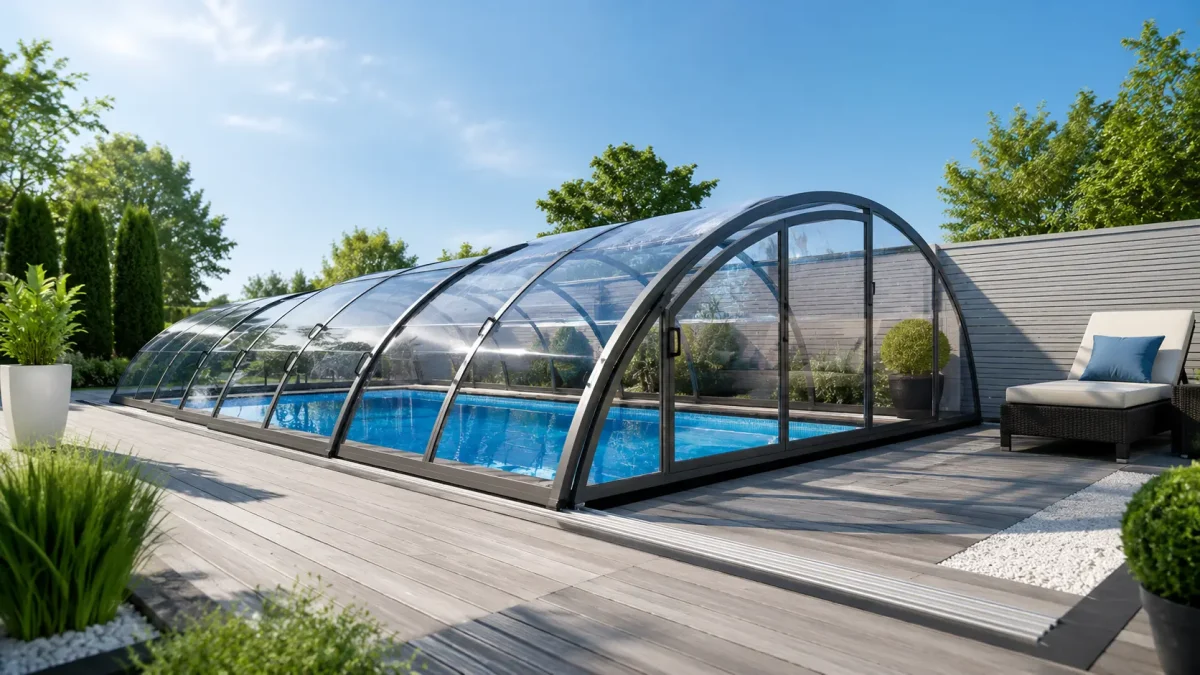
By deciding on your own swimming pool, whether in a private garden or a public space, you are investing significant funds. That is why it is so important for the structure to be not only aesthetic, but also functional and safe. Open pools quickly collect leaves, dust, and other debris, and changing weather conditions can significantly affect the comfort of using the water. The best solution is an appropriate enclosure that protects both the water and the entire structure. In this article, we explain how to build a pool enclosure and what benefits it offers.
Why is it worth covering a pool?
A pool enclosure is an investment that brings measurable benefits not only in terms of aesthetics, but above all functionality and safety. Already at the design stage, it is worth considering structural protection, as an open pool is quickly exposed to weather conditions – rain, wind, dust, or falling leaves. An enclosure keeps the water clean for longer, minimizes the risk of bacteria and fungi growth that may be harmful to health, and protects against accidental falls, which is especially important in households with children.
A well-designed cover reduces heat loss, helping maintain water temperature and lowering heating costs. As a result, swimming becomes comfortable even on cooler days, and the pool usage season can be significantly extended. Additionally, an enclosure acts as a natural acoustic barrier – reducing noise from the surroundings and allowing you to fully enjoy relaxation and peace.
Moreover, modern enclosures can be equipped with ventilation systems and adjustable elements that ensure user comfort regardless of the weather. It is a solution that increases both safety and water hygiene, while significantly enhancing the value of the entire property.
How to plan and build a pool enclosure?
If you are considering covering your pool, it is worth approaching the project with a comprehensive plan – ensuring the structure remains durable, functional, and aesthetically pleasing for many years. The choice of solution depends on the selected material and the form of the enclosure. The market offers both budget-friendly options and more investment-intensive solutions – each with its own advantages and limitations.
Polycarbonate enclosure
Polycarbonate has become a popular alternative to tempered glass. It is highly resistant to weather conditions – snow, rain, hail, and UV radiation do not negatively affect its durability. Additionally, this material withstands impacts and scratches, allowing it to remain in excellent condition for up to 10 years. Polycarbonate sheets are easy to install, and their use ensures comfort as well as solid protection of the pool against debris and heat loss.
Greenhouse-style enclosure
An aesthetic and functional greenhouse-style enclosure is an excellent option for those who value an elegant appearance. Such structures are usually made of wood, glass, and polycarbonate. Their installation requires the work of several people and is best carried out with the support of specialists. Choosing high-quality components guarantees that the structure will remain in perfect condition for many years.
PVC film pool enclosure
This option works mainly for indoor pools. PVC film structures effectively protect against moisture, reduce water condensation, and are relatively easy to install. It is an economical solution for those who want to quickly and functionally secure their pool.
When choosing an enclosure, it is worth considering several factors: material durability, purchase and installation costs, as well as everyday convenience of use. Some people also choose to use garden gazebos as a form of enclosure – a creative, though less durable solution.
Advantages of a pool enclosure
If you are considering covering your pool, it is worth understanding all the benefits this solution provides. An enclosure is not only about aesthetics and comfort – it is primarily about safety, hygiene, and savings. It protects the water from debris, leaves, dust, and insects, significantly reducing the growth of bacteria and fungi. As a result, swimming becomes healthier, and maintaining the pool in ideal condition requires less effort and fewer chemical treatments.
Practicality of a pool enclosure
One of the greatest advantages of a pool enclosure is its exceptional practicality. The structure effectively protects the pool from changing weather conditions – rain, wind, snowfall, and excessive sunlight, which could lead to rapid water evaporation. As a result, you can use the pool at any time, regardless of the season, significantly extending its annual usability.
The enclosure also improves water hygiene – limiting the entry of leaves, insects, or dust into the pool, which reduces the risk of bacterial growth and the need for frequent chemical treatments. For families with small children or pets, the enclosure serves as an additional safety barrier, reducing the risk of accidental falls into the water.
The practicality of an enclosure also includes easier maintenance and operation. Thanks to the cover, cleaning, filter maintenance, and chemical dosing can be planned more efficiently. Many modern enclosures feature sliding or foldable elements, allowing the pool to be quickly opened on warm days or closed during bad weather. Furthermore, the enclosure enables the surrounding area to be used for garden furniture, plants, or decorations without worrying about dirt or weather damage.
As a result, a well-designed enclosure increases comfort, safety, and hygiene, making pool use more enjoyable and less time-consuming.
Heating and ventilation
One of the key advantages of a pool enclosure is its impact on water temperature. Thanks to the cover, the water retains heat for longer, significantly reducing heating costs, especially during autumn and winter. Stable water temperature ensures comfortable swimming even on cooler days, extending the swimming season and increasing the value of the investment.
A well-designed enclosure can additionally support natural air circulation. Ventilation systems or openable panels allow for proper air exchange, limiting excessive humidity and water condensation on the structure’s walls. This reduces the risk of mold growth and corrosion of metal components, as well as the formation of unpleasant damp odors.
An enclosure also optimizes energy use – for example, when combined with solar heating or a heat pump. It protects water from heat loss at night and on cold days while ensuring proper ventilation when temperatures are higher, maintaining a comfortable atmosphere both for swimmers and the surrounding area.
Thanks to the proper combination of thermal insulation and ventilation, an enclosure not only saves money but also increases water hygiene and user comfort, making the pool a welcoming place all year round.

How to choose a pool enclosure and ensure its durability for years?
Choosing the right pool enclosure is a decision that affects not only user comfort, but also the safety and longevity of the entire structure. There are many solutions available on the market, but not all are durable or worth their price. Before making a decision, it is worth carefully analyzing several key aspects.
Frequency of use
Consider how often you plan to use the pool. If you intend to swim year-round – both in summer and winter – it is worth investing in a solid structure made of materials resistant to changing weather conditions. High-quality wood, polycarbonate sheets, and galvanized or stainless steel elements ensure stability and resistance to moisture, UV radiation, and temperature fluctuations.
Material and workmanship quality
Polycarbonate is one of the most commonly chosen materials for enclosures – it is durable, lightweight, impact-resistant, and requires minimal maintenance. Wood provides an elegant, natural appearance but requires regular impregnation and protection against moisture. Metal components should be protected with an anti-corrosion coating to ensure the structure remains problem-free for many years.
Functionality and ventilation
It is important for the enclosure to include doors and windows that allow proper ventilation. This prevents moisture accumulation inside and helps maintain optimal water quality. A well-designed ventilation system also allows temperature regulation and ensures comfort around the pool, especially on warm days.
Professional consultation
The choice of materials and enclosure design is best consulted with an experienced company specializing in such structures. Professionals can advise which components will provide the greatest durability, safety, and user comfort, as well as assist with proper installation. A well-built enclosure is a long-term investment that not only protects the water and pool, but also increases property value and everyday usability.
Pool enclosure — how to build it yourself?
Building a pool enclosure yourself may seem attractive from a cost-saving perspective; however, it is important to approach the task with full awareness of the challenges involved. The structure must primarily be safe and stable, and its size and complex shape make solo execution difficult. Therefore, such work is best carried out with the assistance of at least one experienced person or by using professional services.
When planning a DIY installation, choosing the right materials is crucial – durable and resistant to moisture and UV radiation. Advice from suppliers of high-quality components can be helpful in selecting appropriate polycarbonate sheets, steel elements, and installation accessories.
If you are looking for reliable materials, it is worth considering professional suppliers such as ETL-Group, which offer not only polycarbonate sheets and enclosure accessories, but also aviaries, greenhouses, and garden gazebos. Structures made from their components are easy to assemble, and the materials are covered by a long-term warranty, ensuring the investment will last for many years.
Remember that a pool enclosure is a long-term investment – proper preparation, professional support, and high-quality materials ensure safety, durability, and comfort for many seasons.
Summary
A pool enclosure is an investment that provides multidimensional benefits – from protecting the water and structure, through increasing user safety, to energy savings and weather-independent comfort. Choosing the right material, a solid structure, and well-planned ventilation allows you to enjoy your pool for many seasons while minimizing maintenance requirements. Whether you decide on DIY installation or professional services, an enclosure increases property value and everyday comfort, making the pool a welcoming, safe, and aesthetically pleasing space.
A well-planned and properly constructed enclosure is an investment for years – it protects the water, saves time and money, and above all allows you to fully enjoy swimming in comfortable conditions, regardless of the weather.