

 August 3, 2026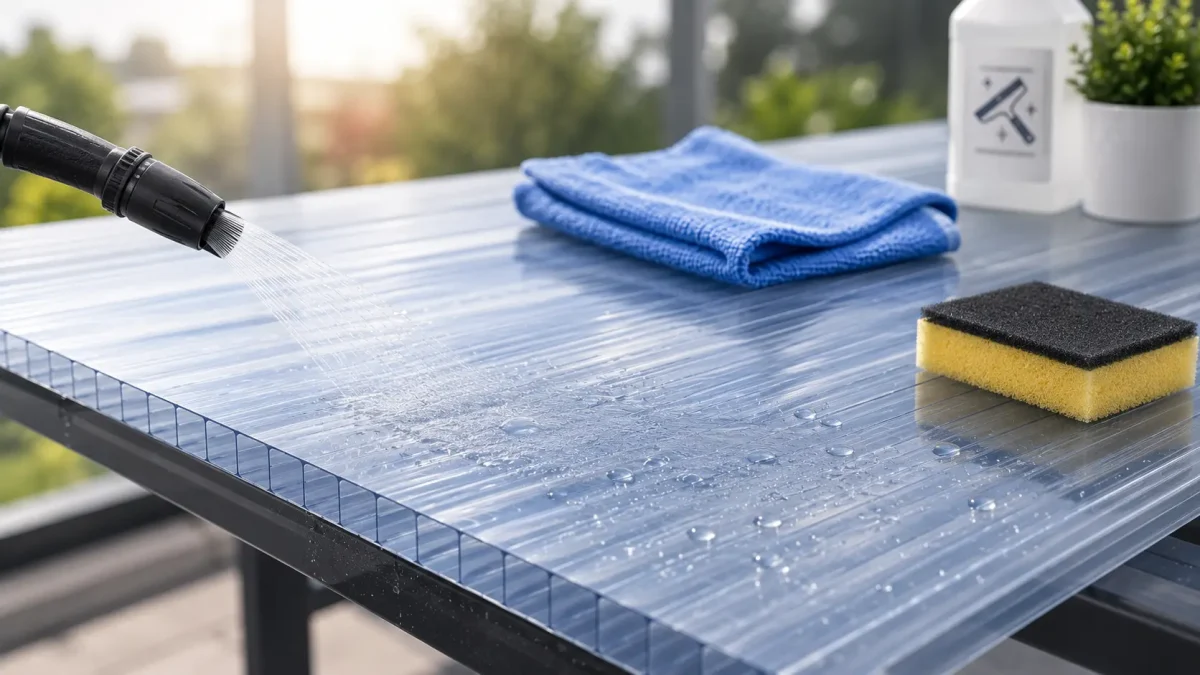
Multiwall polycarbonate is a versatile material that has become popular in construction, horticulture, and industry due to its low weight, excellent thermal insulation, and resistance to UV radiation. From terrace roofing to greenhouses, its applications are almost unlimited. However, regular maintenance is essential if the material is to retain its properties and attractive appearance for many years. In this article, we provide practical advice on how to care for multiwall polycarbonate so that it lasts as long as possible.
1. Basic polycarbonate maintenance
Regular cleaning is essential for keeping polycarbonate in excellent condition. We recommend cleaning it twice a year – in spring to remove dirt accumulated during winter and in autumn before the rainy season.
- Tools: Use a soft sponge or microfibre cloth to avoid scratching the surface.
- Cleaning products: Dilute a mild detergent, such as washing-up liquid, in lukewarm water at a maximum temperature of 40°C. Avoid aggressive chemicals such as ammonia or solvents.
- Technique: Clean the surface using gentle circular movements, then rinse it with clean water. Dry it with a soft cloth to prevent streaks.
Tip: For large surfaces such as rooflights, use a pressure washer at a low pressure setting of no more than 100 bar, keeping the nozzle at least 30 cm away from the sheet.
2. Preventing dirt accumulation
Regular removal of leaves, dust, bird droppings, and other contaminants prevents permanent deposits and protects the internal channels from becoming blocked, which is particularly important in greenhouses.
- Frequency: Inspect the surface every 1-2 months, especially during autumn or in areas exposed to high levels of dust.
- Method: Use a soft brush or a vacuum cleaner with an attachment designed for delicate surfaces to remove loose dirt.
- Edge protection: Make sure the lower edges of the sheets are protected with vapour-permeable tape and the upper edges with solid sealing tape to prevent dirt from entering the chambers.
Example: Regularly removing leaves from terrace roofing prevents moisture accumulation, which could encourage algae growth.
3. Choosing suitable cleaning products
Selecting the correct cleaning product is essential to avoid damaging the UV coating that protects polycarbonate from yellowing and degradation.
- Recommended products: Use pH-neutral detergents, such as washing-up liquid at a ratio of 1-2 tablespoons per 5 litres of water, or dedicated polycarbonate cleaning products available from Oteko.pl.
- Products to avoid: Do not use products containing alcohol, ammonia, petrol, or acetone, as they may cause microcracks or clouding.
- Testing: Before using a new cleaning product, test it on a small, inconspicuous part of the sheet.
Tip: For stubborn stains such as resin, use a 1:1 solution of water and vinegar. Gently wipe the area with a soft cloth and then rinse it thoroughly.
4. Protection from mechanical damage
Polycarbonate is impact-resistant, but improper use may cause scratches or deformation, particularly in external structures such as acoustic barriers.
- Soft tools: Use only sponges, microfibre cloths, or soft brushes for cleaning.
- Protection during other work: Protect the sheets from accidental impacts, for example when cutting wood near a roof structure.
- Loads: Do not place heavy objects on the sheets or walk on them, as this may cause microcracks, especially in thin sheets measuring 4-6 mm.
- Storage: Store unused sheets horizontally on a flat surface, away from sharp edges and direct sunlight.
Example: In greenhouses, avoid leaning a ladder directly against polycarbonate sheets. Use protective pads to prevent scratching.
5. Regular inspections and maintenance
Periodic inspections of the polycarbonate and its fixings help identify problems before they become serious, such as leaks in car park roofing.
- Fixings: Every 6-12 months, inspect screws, profiles, and seals for looseness or corrosion. Tighten loose components to a torque of 2-3 Nm.
- UV coating: Make sure the UV-protected side faces outwards. If you notice yellowing, contact the supplier, as this may indicate a material defect.
- Internal channels: Check whether moisture or dirt has accumulated inside them. Clean the channels with compressed air when necessary.
Tip: In regions with demanding environmental conditions, such as coastal areas where salt is present in the air, increase the inspection frequency to once every three months to help prevent corrosion of the fixings.
6. Long-term storage of polycarbonate
If you intend to store the sheets before installation, provide suitable conditions to prevent damage:
- Position: Place the sheets horizontally on a flat, clean surface with supports positioned every 50-70 cm.
- Protection: Cover the sheets with an opaque tarpaulin to protect them from UV radiation and dust.
- Environment: Store them in a dry, shaded place at a temperature of 0-30°C and away from chemicals.
Would you like to learn more about installing polycarbonate? Read our guide “Step-by-Step Guide to Installing Polycarbonate Sheets”, which explains how to install the sheets correctly so that the finished structure remains durable and visually attractive.
Summary
Proper maintenance of multiwall polycarbonate is essential for preserving its durability, appearance, and functionality. Regular cleaning with mild products, protecting the edges, preventing mechanical damage, and carrying out periodic inspections will allow you to enjoy attractive and reliable structures for many years. Follow our recommendations to keep your roofing, greenhouses, and rooflights looking like new.
Do you have questions or need dedicated maintenance products? Contact the Oteko.pl team – our experts will help you choose the best solutions for your polycarbonate projects.