

 August 3, 2026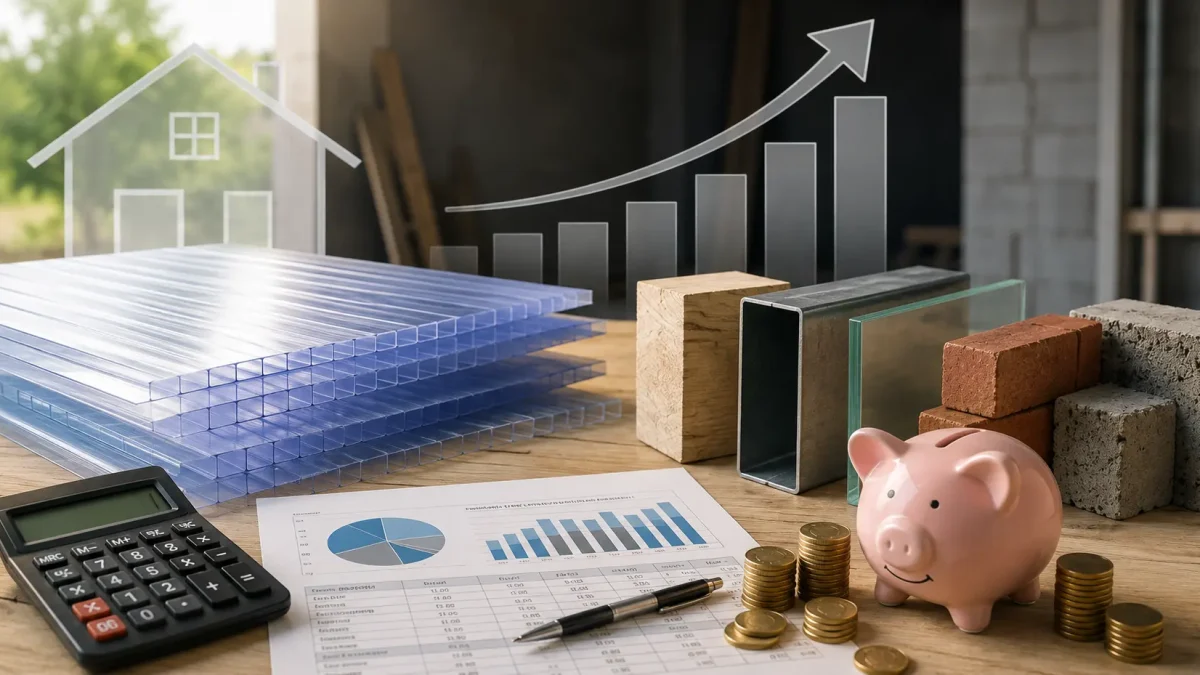
Is investing in polycarbonate worthwhile? This versatile material is becoming increasingly popular in construction due to its low weight, durability, and excellent insulation properties. From greenhouses to terrace roofing, polycarbonate performs well in many applications. However, like any investment, it requires an analysis of costs and benefits. In this article, we examine whether choosing polycarbonate is cost-effective by comparing it with other materials such as toughened glass, acrylic, and trapezoidal sheet metal.
Purchase costs – how does polycarbonate compare with other materials?
The price of the material is one of the key factors when making an investment decision. Below are the approximate purchase costs of popular construction materials, with prices per m² in 2025:
- Solid polycarbonate: PLN 80-350 – ideal for applications requiring high transparency and impact resistance.
- Multiwall polycarbonate: PLN 40-180 – lightweight, with excellent thermal insulation, and commonly used in greenhouses and roofing.
- Toughened glass: PLN 250-700 – visually attractive, but heavier and more expensive to install.
- Acrylic: PLN 120-300 – lighter than glass but less resistant to scratches.
- Trapezoidal sheet metal: PLN 50-200 – less expensive, but opaque and less effective in terms of insulation.
Polycarbonate, especially in its multiwall version, is often more affordable than toughened glass, while its price is comparable to acrylic and trapezoidal sheet metal. However, purchase cost alone does not determine cost-effectiveness – installation and operating costs are also important.
Installation and operating costs – why is polycarbonate cost-effective?
Installation
Due to its low weight, polycarbonate is faster and less expensive to install than toughened glass. Average installation costs are:
- Polycarbonate: PLN 50-120/m² – the lower weight reduces the need for heavy supporting structures.
- Toughened glass: PLN 150-350/m² – requires specialist equipment and more complex structures.
- Acrylic: PLN 80-200/m² – similar in cost to polycarbonate but requires more careful installation due to its lower scratch resistance.
- Trapezoidal sheet metal: PLN 60-150/m² – comparable with polycarbonate but less versatile in applications requiring transparency.
The low weight of polycarbonate can reduce the cost of supporting structures and labour by as much as 20-30% compared with glass.
Maintenance and durability
Polycarbonate requires very little maintenance:
- Resistance to weather conditions: It withstands hail, strong winds, and UV radiation thanks to special protective coatings.
- No need for frequent maintenance: Washing it with water and a mild detergent once or twice a year is usually sufficient and costs only a few PLN per m².
- Recycling: Polycarbonate can be recycled, supporting sustainable construction, although the process requires specialist technologies.
Compared with glass, which may require expensive repairs after damage, or wood, which needs regular protective treatment, polycarbonate offers savings throughout long-term use.
Applications of polycarbonate in construction
The versatility of polycarbonate means that it is used in many residential and commercial construction projects:
- Terrace and balcony roofing: Lightweight and transparent, it provides protection from rain and UV radiation while maintaining access to daylight.
- Rooflights in industrial buildings: They can reduce energy consumption for lighting by up to 50% in large facilities.
- Roadside acoustic barriers: Durable and resistant to vibration, they provide protection from noise.
- Greenhouses and garden structures: Excellent thermal insulation supports efficient plant cultivation throughout the year.
- Internal partitions in offices and shopping centres: Visually attractive and easy to install, making them ideal for modern interiors.
- Building façades: They combine attractive design with energy efficiency, reducing heating and cooling costs.
Is investing in polycarbonate worthwhile? Summary
Investing in polycarbonate combines economic benefits with functionality. The key advantages and challenges include:
Advantages:
- Lower purchase and installation costs: Less expensive than toughened glass, with lower installation costs.
- Durability: Resistance to hail, impact, and weather conditions ensures a long service life.
- Energy efficiency: Thermal insulation and light transmission help reduce energy bills.
- Versatility: Suitable for a wide range of applications, from gardens to industrial facilities.
- Environmental benefits: Recyclability and durability support sustainable construction.
Disadvantages:
- Initial cost: It may be more expensive than trapezoidal sheet metal in some applications.
- Installation requirements: Thermal expansion must be taken into account, which can increase design costs.
- UV protection in less expensive products: Products without a UV coating may turn yellow, making it important to choose higher-quality sheets.
Over a period of 10-20 years, polycarbonate can prove more cost-effective than glass or aluminium due to its lower operating costs and durability, making it an attractive choice for investors.
Frequently asked questions (FAQ)
1. Can polycarbonate replace glass?
Yes, polycarbonate is an excellent alternative to glass in many applications. It is lighter, considerably more impact-resistant – up to 200 times more resistant than glass – and offers better thermal insulation. In addition, a UV coating provides protection from radiation, making the material ideal for roofing, rooflights, and greenhouses.
2. Does polycarbonate turn yellow over time?
Modern polycarbonate sheets are equipped with a protective UV coating that prevents yellowing and clouding, even after many years of exposure to sunlight. Without this coating, the material may gradually lose its transparency, so it is worth choosing products with certified UV protection.
3. How should polycarbonate be maintained so that it lasts for years?
To extend the service life of polycarbonate:
- Wash it regularly with water and a mild detergent, avoiding aggressive chemicals.
- Avoid sharp tools that could scratch the surface.
- Use dedicated protective products if recommended by the manufacturer.
- Check that the joints remain watertight to prevent moisture accumulation.
4. Is polycarbonate resistant to hail?
Yes, polycarbonate is highly resistant to hail and other mechanical impacts. Unlike glass, which may crack, polycarbonate absorbs impact energy, making it ideal for demanding conditions, including roofing in regions exposed to storms.
5. What are the alternatives to polycarbonate?
Depending on the requirements, the alternatives include:
- Toughened glass: More visually attractive, but more expensive and less resistant to impact.
- Acrylic: Lighter, but susceptible to scratches and less durable.
- Trapezoidal sheet metal: Less expensive, but opaque and less effective in terms of insulation.
The choice depends on the budget, desired appearance, and project requirements.
6. Is polycarbonate environmentally friendly?
Polycarbonate supports sustainable construction through its durability and energy efficiency. Although its production is energy-intensive, its recyclability and long service life reduce its environmental impact compared with materials that require frequent replacement.
Summary and practical advice
Polycarbonate is an investment that combines an affordable price with durability and versatility. Although the initial cost may be higher than that of trapezoidal sheet metal, it proves more cost-effective than glass or aluminium in the long term due to its low maintenance costs, energy efficiency, and resistance to damage.
Practical advice for investors:
- Choose the appropriate thickness: Thinner sheets of 4-10 mm are suitable for greenhouses, while thicker sheets of 16-25 mm are better suited to industrial roofing.
- Allow for thermal expansion: Leave expansion gaps of 3-5 mm to prevent deformation.
- Choose dedicated accessories: Use aluminium profiles and polycarbonate seals to ensure watertight installation.
- Use UV-protected sheets: Choose sheets with UV protection to prevent yellowing and loss of transparency.
- Maintenance: Clean the surface with water and a mild detergent, avoiding aggressive chemical products.
With polycarbonate from Oteko.pl, you can create durable, visually attractive, and cost-effective structures that will serve you for many years. Contact us to select the ideal solution for your project!