


 August 3, 2026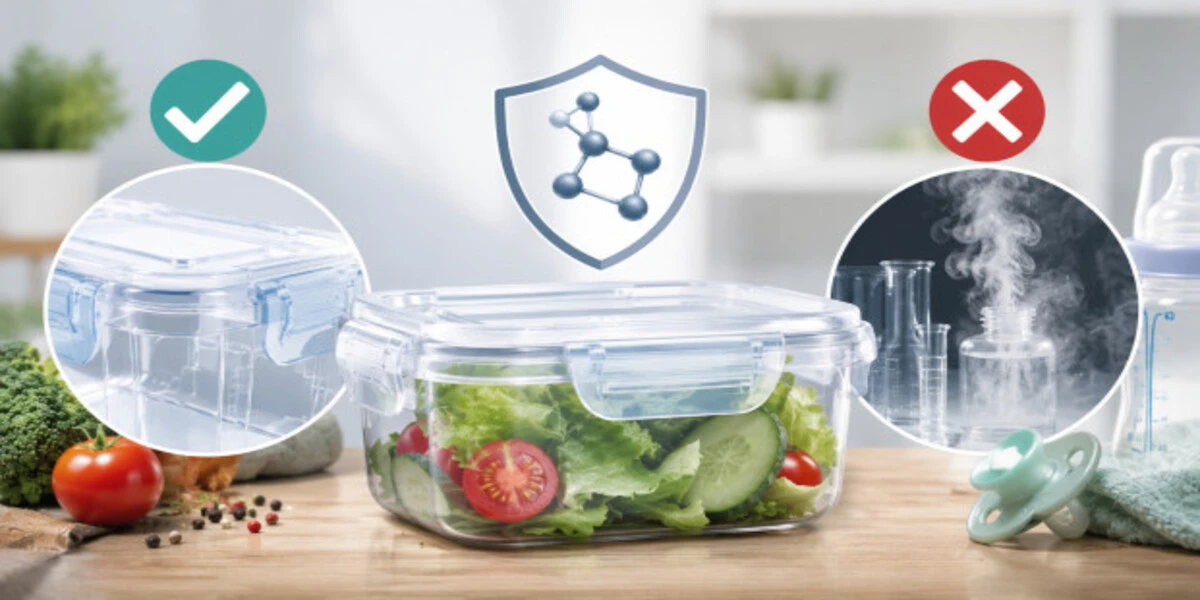
Polycarbonate is a popular material used to build greenhouses, canopies, terrace covers, pergolas, and lightweight garden structures. It is lighter than glass, impact-resistant, relatively easy to install, and available in many thickness variants. At the same time, many people ask an important question before buying it: is polycarbonate harmful to health, plants, or crops grown in a greenhouse?
The answer requires several issues to be separated. A material used as a greenhouse covering is assessed differently from plastics intended for contact with food, drinking water, or high temperatures. Polycarbonate used in gardening primarily serves as a structural covering: it transmits light, reduces the impact of wind, rain, and hail, and helps maintain more stable conditions inside the greenhouse. However, it should not be treated as a universal material for every possible use.
In the context of safety, the subject of BPA, or bisphenol A, appears most often. It is worth noting straight away that regulatory discussions mainly concern human exposure through food and materials that come into direct contact with food and drinks. In 2023, the European Food Safety Authority considered dietary exposure to BPA a health concern for consumers in all age groups. On 19 December 2024, the European Commission adopted a ban on the use of BPA in materials intended for contact with food and drinks. This information does not automatically mean that a polycarbonate greenhouse covering is dangerous, but it does show that the topic should be described precisely, without simple and overly reassuring shortcuts. More information can be found in the official statements: EFSA on BPA in food and the European Commission on the ban on BPA in food contact materials.
In practice, when it comes to a greenhouse, the most important thing is to choose sheets intended for outdoor use, install them correctly, avoid using them against their intended purpose, and maintain their technical condition. Properly selected multi-wall polycarbonate can be a durable and functional material for the garden, provided that the user understands its properties and limitations.
Short answer: is polycarbonate safe in a greenhouse?
In typical horticultural use, polycarbonate serves as a structural covering and is not a material intended for direct contact with food. Therefore, it should not be assessed in the same way as bottles, containers, can linings, or kitchenware. A sheet installed as a greenhouse covering separates the inside of the structure from rain, wind, and hail, but it should not be used as a work surface for preparing food or as an element that comes into direct contact with food products.
The most responsible answer is this: polycarbonate used as a greenhouse covering, canopy, or pergola roof can be safe in everyday use if it is selected for outdoor applications, has an appropriate UV layer, has been installed correctly, and is used according to the manufacturer’s recommendations. There is no basis for treating the mere use of polycarbonate sheets in a greenhouse as equivalent to a threat to the user. At the same time, this material should not be described as completely inert in every possible application, as that would be too much of an oversimplification.
That is why, when assessing safety, it is necessary to separate facts from myths. It is a fact that BPA is a substance under particular regulatory attention in the context of food and food-contact materials. However, it would be a myth to claim that every polycarbonate sheet used in the garden automatically harms people or plants. The opposite statement would also be wrong: that polycarbonate can always be used without any restrictions. The key factors are the product’s intended use, material quality, installation method, greenhouse ventilation, and regular inspection of its technical condition.
What is polycarbonate?
Polycarbonate is a thermoplastic, meaning a material that can be formed into sheets, protective elements, and various technical structures under appropriate technological conditions. In gardening and lightweight construction, two main variants are most common: solid polycarbonate and multi-wall polycarbonate. Both belong to the same group of materials, but they differ in structure, weight, rigidity, insulation properties, and typical use.
Solid polycarbonate resembles a transparent sheet with a compact structure. It is impact-resistant and can be used where high mechanical strength and a visual effect close to glass are important. Multi-wall polycarbonate has internal channels, or air chambers. Thanks to them, it is lighter, has better insulation properties, and works well as a covering for greenhouses, canopies, pergolas, and garden covers.
It is this multi-wall structure that makes the material so often chosen for greenhouses. The chambers limit heat loss, help diffuse light, and reduce the weight of the entire structure. Compared with glass, the sheets are easier to transport and install, and with proper fixing they withstand typical garden loads such as wind, precipitation, and accidental impacts more effectively. However, it should be remembered that polycarbonate, like other plastics, requires proper handling during cutting, drilling, fixing, and cleaning.
Polycarbonate and BPA – what is worth knowing?
BPA, or bisphenol A, is a substance associated with the production of certain polycarbonate plastics and resins. In recent years, BPA has become especially important in the European Union because risk assessments focus on possible human exposure through food, packaging, coatings, and materials that come into direct contact with food. This is why official institutions such as EFSA, the European Commission, and ECHA have published statements and regulations related to BPA.
For a greenhouse owner, the key distinction is this: a material intended for contact with food is one thing, while a sheet used as a structural element is another. A greenhouse covering should not have direct contact with food in the same way as a bottle, container, can lining, or kitchen utensil. Plants grow in substrate, use water, light, and the microclimatic conditions inside the greenhouse, while the sheet serves as a protective covering.
This does not mean, however, that the topic of BPA can be ignored completely. In a professional description, it is better to avoid categorical statements such as “polycarbonate never releases anything” or “BPA does not matter”. A safer and more reliable explanation is that current regulatory restrictions primarily concern food-contact materials, while in horticultural applications it is necessary to choose products intended for outdoor use, install them according to instructions, and avoid using them in a way not foreseen by the manufacturer.
It is also worth paying attention to the difference between theoretical risk and the real way the material is used. If a polycarbonate sheet is installed as a greenhouse roof or wall, it does not function as food packaging. If, however, someone wanted to use a random sheet as a water container, kitchen surface, or element in contact with hot food, that would be a use inconsistent with the typical purpose of garden polycarbonate. This distinction makes it possible to talk about safety accurately, without scaremongering and without downplaying the issue.
Is polycarbonate harmful to health?

Polycarbonate used as a greenhouse covering or canopy is not a material intended for eating, drinking, or direct contact with food. In typical garden use, it acts as an external covering. Therefore, the question of harmfulness must be considered in a specific context: whether it concerns human contact during greenhouse use, impact on plants, risk related to heating, or the presence of BPA in the production history of this plastic.
There is no basis for treating correctly selected and properly installed polycarbonate sheets in a greenhouse as a direct threat to the user. However, product quality, intended use, UV protective layer, installation method, and operating conditions matter. Sheets used outdoors should be resistant to sunlight and weather conditions. They should not be exposed to aggressive chemicals, cleaned with solvents, or used for purposes for which they were not designed.
In everyday use, basic safety rules for working with plastics are also important. When cutting or drilling, the sheet should be stably supported, appropriate tools should be used, and the eyes should be protected from small chips. After processing, it is worth removing dirt from the chambers, securing the edges, and checking that the sheet was not damaged during fixing. These are not rules resulting from any special “toxicity” of polycarbonate, but standard requirements when working with building and covering materials.
Does polycarbonate in a greenhouse harm plants?
In a typical greenhouse, polycarbonate is not a substrate, fertiliser, or preparation applied directly to plants. Its effect on crops results mainly from the way it shapes conditions inside the structure. A good sheet can reduce the impact of wind and cold, diffuse light, lower the risk of damage caused by hail, and help maintain a more stable temperature. These features are beneficial for many crops, provided that the greenhouse is well designed.
Plants do not benefit from overheating, excessive humidity, or lack of air exchange. That is why the mere presence of polycarbonate is not enough for healthy cultivation. Ventilation, the number of windows, the possibility of airing, proper watering, substrate quality, and regular temperature observation are also important. In a greenhouse closed in full sun, the temperature can rise quickly, regardless of whether the covering is made of glass, film, or polycarbonate.
Light transmission should also be considered. In many cases, clear sheets provide high light transmission, while milky or tinted variants diffuse light more strongly and may reduce sharp overheating inside the greenhouse. The choice of colour and thickness should be matched to the type of crops, plot exposure, and whether the greenhouse is intended mainly for the spring and summer season or for a longer part of the year. For tomatoes, peppers, or cucumbers, the sheets themselves will not be the only key factor – the ability to ventilate regularly and control humidity will be just as important.
Facts and myths about the harmfulness of polycarbonate
Several simplifications have grown around polycarbonate, making it harder to choose the material reasonably. One of them is the belief that every type of polycarbonate is dangerous simply because BPA appears in regulations concerning food. The second is the opposite assumption: that because sheets are widely used in gardens, they can be used in any way and under any conditions. Both approaches are too extreme.
It is a fact that polycarbonate in a greenhouse serves as a covering, not as a food-contact material. It is also a fact that BPA is an important topic in relation to contact with food. However, it is a myth to automatically transfer all regulations concerning food packaging to sheets used as the covering of a garden structure. A reliable assessment should take into account the specific application, not only the word “polycarbonate”.
It is also worth being careful with marketing claims that present every material as ideal and free from limitations. Polycarbonate is lightweight, impact-resistant, and practical, but it requires proper installation, chamber protection, and protection against unsuitable chemicals. If the sheets are of low quality, do not provide clear information about the UV layer, or have been installed the wrong way round, they may yellow, become dull, and lose functionality faster. This does not necessarily mean a health risk, but it does mean poorer durability and a higher risk of practical problems.
The most important properties of polycarbonate in a greenhouse
The popularity of polycarbonate does not come from one feature, but from a combination of several properties that are important in the garden. The material should be lightweight, durable, impact-resistant, and practical in everyday use. This is why many people choose polycarbonate greenhouses instead of structures covered with traditional glass or seasonal film.
When assessing the material, it is worth looking at specific parameters, not only the general term “polycarbonate”. Differences between 4 mm, 6 mm, 10 mm, and 16 mm sheets can be noticeable in the rigidity of the covering, insulation performance, and behaviour of the entire structure during temperature changes. A sheet for a small seasonal greenhouse has different requirements from one used for a larger canopy or a structure exposed to stronger wind.
When choosing a material for a greenhouse, it is worth paying attention mainly to the parameters that genuinely affect durability and comfort of use:
- impact resistance – important in hail, precipitation, garden work, and accidental tool impacts;
- low weight – makes transport, cutting, installation easier and reduces the load on the structure;
- insulation – in multi-wall sheets, it helps maintain more stable thermal conditions inside the greenhouse;
- light transmission and diffusion – affect plant growth conditions and the comfort of cultivation;
- UV layer – slows material degradation under sunlight if it is directed outward according to the instructions;
- ease of processing – allows sheets to be adjusted to the structure, but requires proper drilling, cutting, and fixing.
These properties show why polycarbonate works well in the garden, but they also remind us that durability depends on details. Even a good sheet can lose its appearance or tightness faster if it is installed incorrectly, closed without suitable profiles, or turned with the UV-protected side facing the inside of the greenhouse.
How to choose polycarbonate for a greenhouse?
Choosing polycarbonate should start with the question of how the greenhouse will be used. A small structure for seasonal cultivation of tomatoes, cucumbers, and peppers may have different requirements from a larger all-season greenhouse, where higher covering rigidity and better temperature stability matter. The thickest sheet will not always be necessary, but the cheapest option will not always prove best in the long term either.
Location also matters. On an open plot, where the structure is strongly exposed to wind, more attention should be paid to frame stability, anchoring, and fixing quality. In a very sunny location, ventilation and the possibility of limiting overheating will be important. In a sheltered garden, with standard seasonal use, the priority may be a good balance between price, light transmission, and ease of installation.
When buying sheets, it is worth checking whether the manufacturer clearly states the intended use of the material, thickness, UV layer information, installation recommendations, and compatible accessories. In the case of a ready-made greenhouse kit, it is worth making sure that the sheets, profiles, seals, and fixing elements form a coherent system. Properly selected polycarbonate accessories can also help, as they often determine the tightness, appearance, and durability of the entire covering.
It is worth avoiding a choice based only on price. A very cheap sheet without clear parameters may prove problematic if it becomes dull faster, cracks around fixings, or does not have a clearly marked UV-protected side. A safer solution is to compare thickness, intended use, installation instructions, and available system elements. This way, the material will be matched not only to the budget, but also to the structure, plot conditions, and way the greenhouse is used.
Safe use of polycarbonate – what should be avoided?
Polycarbonate is a practical material, but it should not be treated as a surface completely resistant to every condition. The most common mistakes do not result from the material itself, but from incorrect installation and maintenance. Over-tightening screws, lack of expansion allowance, unprotected chambers, poorly chosen cleaning agents, or removing markings before installation is complete can reduce sheet durability.
It is also important not to use polycarbonate in a way for which it is not intended. A garden sheet is not a food container, kitchen worktop, or element for contact with hot food. It should not be burned, cut without eye protection, or cleaned with aggressive chemicals. During processing, standard safety rules for working with plastics should be followed: stable support, correct tools, edge control, and removal of chips after cutting.
For everyday greenhouse use, regular inspection of sheets, fixings, and seals is usually enough. If dirt, algae, or insects begin to collect in the chambers, this most often indicates a problem with edge protection. If the sheet yellows, crumbles, or becomes dull faster than it should, the cause may be the absence of a suitable UV layer, incorrect installation side, or poor material quality.
Installation has a major impact on durability and safety
In the case of multi-wall polycarbonate, installation is just as important as the quality of the sheet itself. The material works under the influence of temperature, so it needs space for expansion. Mounting holes should be made with appropriate clearance, and fixings must not crush the surface. Excessive pressure may cause stress, microcracks, or deformation, which can weaken the covering over time.
The direction of the chambers is also important. In greenhouses and canopies, they should be positioned so that moisture and condensation can drain away. Open edges must be protected with tapes and profiles; otherwise dust, insects, and water may enter the inside. This not only worsens the appearance of the sheets, but also reduces their light transmission and makes it harder to keep the structure in good condition.
If the structure is being built independently, it is worth checking the rules for installing multi-wall polycarbonate before starting work. Particularly important aspects include: the correct side with the UV layer, proper drilling, profile selection, edge protection, maintaining a slope, and using accessories that do not damage the sheet surface. Correct installation reduces the risk of leaks, dirty chambers, cracks around fixings, and faster material wear.
How to care for polycarbonate in a greenhouse?

Polycarbonate maintenance is not complicated, but it should be regular and gentle. The safest method is washing with water, a mild detergent, and a soft sponge or cloth. Sharp brushes, abrasive powders, metal scrapers, solvents, and strong chemical preparations should not be used, as they may damage the sheet surface or the protective layer.
In a greenhouse, sheets should be cleaned not only for aesthetic reasons. Deposits, dust, and surface build-up reduce light access, which can affect plant growth conditions. Inspection is best carried out after winter, before the intensive growing season, and after strong winds or hail. At that point, it is possible to check whether profiles are stable, tapes have not come loose, and fixings do not require adjustment. Practical guidance on how to maintain polycarbonate may also be helpful, especially when the structure is used throughout the season.
When maintaining and inspecting a greenhouse, it is worth following a few simple rules:
- Wash the sheets with a soft sponge or cloth, using water and a mild cleaning agent;
- Do not use solvents, abrasive agents, sharp brushes, or metal tools to remove dirt;
- Check whether the chambers are protected with tapes and profiles, especially along the lower edges;
- Inspect fixings after strong wind, snowfall, and hail;
- Remove leaves, branches, and heavy wet snow from the roof if the structure manufacturer requires it;
- Maintain greenhouse ventilation to reduce excessive humidity, condensation, and overheating inside.
Regular maintenance extends the life of the sheets and makes it easier to spot small problems before they turn into more serious damage. With correct installation, regular inspection, and good-quality sheets, a polycarbonate greenhouse can remain functional for many seasons, but its actual durability depends on material quality, sheet thickness, sun exposure, weather loads, and installation method.
Is polycarbonate suitable for a terrace roof, pergola, or carport?
Although this article focuses on greenhouses, similar rules also apply to terrace roofs, pergolas, and carports. In these applications, polycarbonate acts as protection against rain, wind, sun, and light impacts. The material is valued for its low weight, mechanical resistance, and ability to be adapted to various structures. However, this does not remove the need to choose the correct thickness, support spacing, and fixing elements.
In roof structures, the thermal movement of sheets is especially important. Polycarbonate expands and contracts under the influence of temperature, so it must have appropriate installation clearance. Rigidly closing the sheet without allowing natural material movement is a mistake. Proper water drainage, an appropriate slope, and edge protection are just as important to prevent moisture from accumulating in the chambers.
Well-selected fixing elements are also useful for such structures. If the topic concerns independent installation, a guide on how to choose screws for multi-wall polycarbonate may be helpful. Incorrect fixing can lead to leaks, cracked edges, sheet waviness, or faster wear of the entire covering. For this reason, the safe use of polycarbonate should be understood more broadly than simply as the absence of harmful impact on health. It also concerns stability, tightness, and predictable behaviour of the structure in everyday conditions.
When can polycarbonate cause problems?
Problems with polycarbonate usually appear when the material is low quality, poorly selected, or installed without following basic rules. The most common symptoms include yellowing, dulling, cracking around fixings, leaks, dirty chambers, and reduced light transmission. Some of these problems result from natural ageing, but many can be limited already at the purchase and installation stage.
It is risky to buy sheets without clear information about the UV layer, intended use, and technical recommendations. If a sheet with a protective layer is installed the wrong way round, the sun will destroy the side not adapted to outdoor exposure more quickly. If the chambers remain open, dirt may quickly appear and later be difficult to remove. If screws are tightened too strongly, stress and cracks may appear around the fixing points.
It is also worth being realistic about durability. Polycarbonate is resistant and practical, but it is not indestructible. It requires a correct design, stable structure, proper installation, and periodic inspection. In return, it provides lightness, good functionality, and convenience that is difficult to expect from traditional glass in small and medium-sized garden structures.
How to distinguish reasonable caution from unnecessary fear?
Reasonable caution means not ignoring the properties of the material and not using it outside its intended purpose. In the case of polycarbonate, this means choosing sheets intended for outdoor use, checking the UV layer, properly protecting the chambers, using compatible accessories, and regularly inspecting the condition of the structure. These are practical actions that genuinely affect durability and comfort of use.
Unnecessary fear begins when all information about BPA is transferred directly to every situation in which the word “polycarbonate” appears. Regulations concerning food-contact materials have a different context from a greenhouse covering, which is a protective element. This does not mean that the topic of BPA should be omitted. It means that it should be clearly stated what the official restrictions apply to and what application a given product is intended for.
The best approach is to avoid two extremes. Polycarbonate should not be presented as a dangerous material by definition, but it is also not worth promising that every variant will be equally durable and suitable for every application. Safety in use results from matching the material to the structure, correct installation, proper care, and following the manufacturer’s recommendations.
Summary
Polycarbonate used in greenhouses and canopies should not be assessed in the same way as materials intended for direct contact with food. In typical horticultural use, it is primarily a structural covering that protects crops from weather conditions, transmits light, and helps create a more stable environment for plants. There is no need to present it as a dangerous material, but its limitations and current knowledge about BPA should not be ignored either.
The most reasonable approach is to choose sheets intended for outdoor use, with a UV layer, appropriate thickness, and clear manufacturer recommendations. Correct installation, greenhouse ventilation, chamber protection, gentle cleaning, and regular inspection of the structure are just as important. These are the elements that determine whether polycarbonate will be durable, convenient, and safe in everyday use.
Do not choose polycarbonate based only on price. Check the technical parameters, installation method, and manufacturer’s recommendations so that the structure is durable, tight, and convenient in everyday use.